Written by Stephen Njenga, a writer covering skin and health in Kenya. I am not a dermatologist or a medical professional, and this guide has not been medically reviewed. It is built from published scientific sources, listed at the end and linked so you can check them yourself. Facts last checked: 4 October 2026.
You’ve tried the viral serum. You’ve followed the ten-step routine from an influencer’s video. And yet, your dark spots are still there—or worse, they look darker than before.
That doesn’t mean your skin is broken. It means most skincare advice isn’t written for you. Standard routines are usually designed for lighter skin tones in cooler climates. They rarely account for the unique behavior of melanin-rich skin, or for the daily environmental stressors of living in East Africa: intense equatorial sun, high altitude in places like Nairobi, traffic dust, and shop shelves flooded with unregulated products.
This guide builds a straightforward, science-backed skincare routine for dark skin in Kenya around what clinical research actually supports and what you can reliably buy in local pharmacies and beauty shops.
1. The Kenya Factor: Why Your Environment Is Deepening Your Dark Spots?
High Altitude, Intense Equatorial Rays
Kenya sits right on the equator, where sunlight arrives more directly. If you live in high-altitude regions like Nairobi—which sits at an elevation of roughly 1,700 meters—the climate creates unique skin challenges. According to meteorological data, ultraviolet (UV) radiation intensity increases by 10% to 12% for every 1,000 meters of altitude. This means your skin faces a significantly harsher UV environment in the highlands than it would at sea level.
While melanin provides a small amount of natural protection against UV damage, dermatologists emphasize that it is not a shield. For anyone dealing with hyperpigmentation, sun exposure acts like fuel on a fire. It darkens existing marks and triggers new pigment production. Your clearing treatments will simply not work if you skip daily sun protection.
Borehole Water and the Skin Barrier
Many households across Nairobi, Kiambu, and Machakos counties rely heavily on borehole water. While water quality varies dramatically by estate, hard water can sometimes leave your skin feeling tight, dry, or irritated after a shower. Research indicates that water hardness can disrupt the skin’s outer barrier and trigger underlying conditions like eczema.
If your skin feels stripped after washing, do not panic or rush to buy expensive shower filters (which lack strong clinical proof of efficacy). Instead, shift to a gentle, fragrance-free cleanser and apply your moisturizer immediately while your skin is still damp to seal in hydration.
Managing City Dust and Pollution
Navigating traffic in Nairobi or Mombasa means exposing your skin to particulate dust, exhaust fumes, and environmental pollution. If you wear heavy sunscreen or makeup, a single gentle wash might not feel like enough. While a two-step cleanse using an oil-based balm followed by a water-based face wash is a popular trend, clinical evidence doesn’t show it is strictly mandatory. Treat it as an optional step if your skin feels heavily congested at the end of the day.
2. Melanin-Rich Skin 101: What Post-Inflammatory Hyperpigmentation (PIH) Actually Looks Like
When dark skin experiences an injury or inflammatory condition—such as acne, an insect bite, a scratch, or a harsh chemical burn—the pigment-producing cells (melanocytes) go into overdrive. This results in Post-Inflammatory Hyperpigmentation (PIH).
On skin of color, PIH typically presents as flat, dark brown, or blue-gray macules and patches left behind at the exact site where the original wound healed. A clinical review of PIH notes that it affects darker skin tones (Fitzpatrick skin types IV through VI) with significantly greater frequency and severity, making it one of the top reasons people of color consult dermatologists.
The Golden Rule of Melanin: The less you irritate your skin, the fewer dark spots you will get. Ironically, the aggressive use of harsh scrubbing brushes or strong, unverified “brightening” creams causes the exact inflammation that triggers new, deep-seated dark marks.
Dangerous Pitfalls to Avoid in Kenya
- Unregulated Skin-Lightening Creams: The Kenya Bureau of Standards (KEBS) explicitly prohibits mercury, hydroquinone, and high-strength steroids in general cosmetics. These medically regulated ingredients should only ever be used under the strict supervision of a medical doctor. Unregulated cosmetic mixtures bought from backstreet shops can cause severe skin thinning, paradoxical skin darkening (exogenous ochronosis), permanent chemical damage, and systemic kidney damage from mercury exposure.
- Raw Lemon or Lime Juice: A popular DIY internet trend is rubbing fresh lemon slices on dark spots to bleach them. Do not do this. Citrus fruits contain organic compounds called furocoumarins. When left on the skin and exposed to Kenya’s strong sunlight, they trigger a severe phototoxic reaction known as phytophotodermatitis. This results in painful, blistering burns that resolve into deep, severe dark streaks that can take over a year to fade.
- Picking and Squeezing: Popping a pimple turns a minor, temporary whitehead into a deep dermal injury, practically guaranteeing a dark brown patch that lasts for months.
3. The Ingredients That Work: What Clinical Evidence Says
Before spending money at the pharmacy, look at what clinical trials actually prove. Cut through the marketing jargon with this honest summary of active ingredients for hyperpigmentation treatment in skin of color:
| Ingredient | What Clinical Evidence Provably Shows | What to Keep in Mind |
|---|---|---|
| Azelaic Acid | Strong evidence. Clinical trials show it significantly reduces hyperpigmentation in darker skin tones. A landmark randomized trial found 20% azelaic acid drastically faded dark spots in Fitzpatrick IV–VI patients over 24 weeks. | Excellent for acne-prone skin because it calms inflammation while targeting pigment cells. |
| Alpha Arbutin | Recognized as an effective, mild tyrosinase inhibitor (it slows down pigment production). | It is a safer derivative of hydroquinone but acts slowly. Expect very gradual results. |
| Niacinamide | Solid evidence for facial hyperpigmentation. It works by physically blocking the transfer of pigment into your skin cells. | Safe and highly tolerable, but it typically takes 8 to 12 weeks of daily consistency to show visible changes. |
| Vitamin C | Acts as a powerful antioxidant that helps protect skin from environmental damage and brightens general tone. | While it brightens general skin tone, evidence showing it can completely fade deep, localized PIH spots on its own is limited. |
| Topical Retinoids | Strong evidence. Studies show molecules like tretinoin, adapalene, and tazarotene accelerate skin cell turnover, fading dark marks quickly. | They can cause initial peeling, dryness, and irritation. If your skin gets too irritated, it will produce more dark spots. |
| Tranexamic Acid | Highly effective for melasma. For post-acne dark spots (PIH), the evidence is still emerging but looks highly promising. | Topical serums are safe, but oral versions are strict medical prescriptions carrying blood-clotting risks. |
4. The Realist’s Daily Routine
The Morning Plan (Protect and Prevent)
- Step 1: Gentle Wash. Rinse your face with a mild, non-foaming, fragrance-free cleanser, or use plain water if your skin feels exceptionally dry from borehole water.
- Step 2: Brightening Serum (Optional). Apply an alpha arbutin, vitamin C, or niacinamide serum. Introduce only one new active at a time. If it stings or burns, wash it off immediately.
- Step 3: Basic Moisturizer. Apply a simple lotion or cream to seal in hydration and protect your skin barrier from city dust.
- Step 4: Sunscreen (The Non-Negotiable Step). Apply a generous amount of broad-spectrum SPF 30 or higher every single morning.
- The Tinted Advantage: For dark spots and hyperpigmentation, tinted sunscreens containing iron oxides are highly recommended. While standard clear sunscreens block UV rays, they do not block visible light from the sun or electronic devices, which can worsen pigmentation in dark skin. Iron oxides physically block visible light.
- Let your sunscreen settle for 5 to 10 minutes before stepping out into the Kenyan sun or applying makeup, and reapply according to product instructions if you are outdoors.
The Evening Plan (Treat and Repair)
- Step 1: Cleanse. Wash away the day’s dust, sweat, and sunscreen using your gentle cleanser.
- Step 2: Targeted Treatment. Apply one active treatment at a time (such as your azelaic acid or your retinoid gel). Do not layer multiple raw acids together on the same night unless they are pre-formulated into a single product. Start by applying your treatment just two or three nights a week to monitor for irritation.
- Step 3: Moisturize. Follow up with a generous layer of a plain, soothing moisturizer to help your skin tolerate the treatment.
Not sure with your skin type and what routine to follow
5. Local Product Guide: What to Buy in Kenya
The following table includes international pharmacy staples alongside prominent Kenya-formulated brands. Prices are gathered directly from local brand websites or listed by reputable Kenyan distributors like Portal Pharmacy as of October 2026.
Before purchasing or using any product, make sure to double-check the physical label to verify the product names, exact active ingredient dosages, and manufacturing/expiry values are accurate.
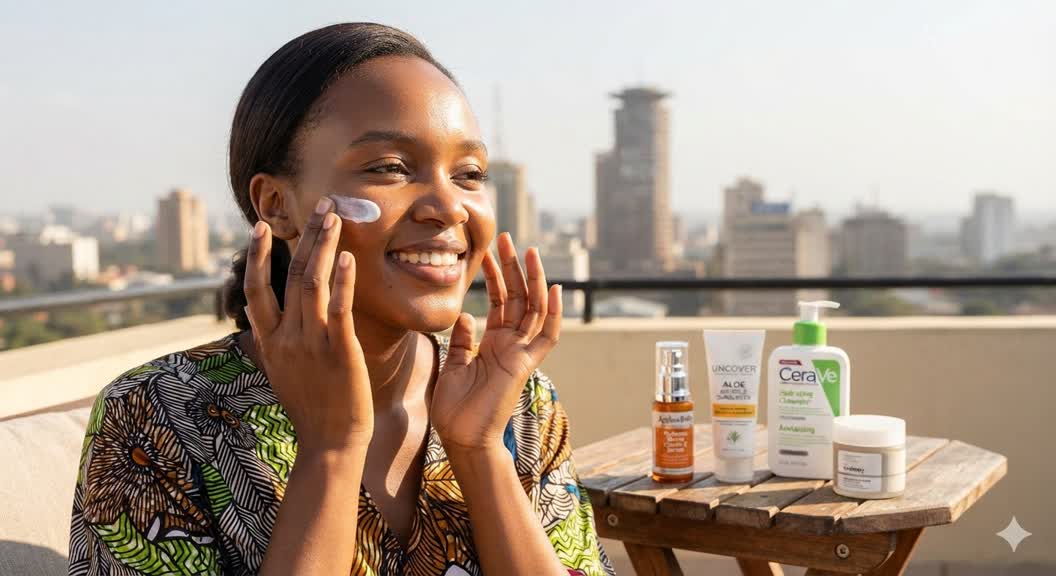
In the Kenyan market, a variety of accessible cleansers, targeted treatments, and sunscreens are available at major distributors and local brands [12].
- Cleansers & Treatments: Options like CeraVe Hydrating Cleanser suit hard-water areas, while serums containing alpha arbutin or azelaic acid (such as from The Ordinary) target pigment and breakouts. Local formulations like Ageless Belle Radiance Revive offer vitamin C and alpha arbutin combinations [12].
- Moisturizers & Sunscreens: Lightweight hydrators like Uncover Argan Hydrating Moisturizer and high-protection options like Uncover Aloe Invisible Sunscreen SPF 50+ provide local choices leaving no white cast [12]. Prescription options like Adapalene are available at licensed chemists [6, 7].
Always verify product packaging, patch-test new products for 24 hours [4], and consult a medical professional when required.
6. Real Expectations: The Fading Timeline
You must treat the underlying cause of your hyperpigmentation first. If you have active, inflammatory acne, focus entirely on calming the breakouts before worrying about the dark spots. Treating dark spots while new pimples are actively forming is a losing battle.
Acne usually heals weeks before the resulting dark marks do. With consistent sun protection and gentle topical care, epidermal dark spots typically show visible fading within 8 to 12 weeks. Deeper dermal pigmentation or long-standing marks can take anywhere from 6 to 12 months to fully resolve. Do not switch products every three weeks out of frustration; skincare rewards patience.
7. When to Stop DIYing and See a Doctor
Skincare products over the counter have limits. You should stop experimenting and seek professional medical care if:
- A dark spot is changing shape, growing rapidly, itching intensely, bleeding, or displaying irregular borders [4]. Furthermore, check your nails—skin conditions like melanoma in darker skin tones often manifest in less common places, such as a dark line under a nail, or on the palms and soles of the feet.
- Your acne is cystic, painful, leaving physical pitted scars, and refusing to clear up with basic over-the-counter washes.
- Your skin has reacted severely to a cosmetic product, showing persistent burning, swelling, oozing, or rapid darkening.
How to Find a Specialist in Kenya
In Kenya, dermatology is a highly specialized medical field. The Kenya Association of Dermatologists (KAD) represents slightly over 30 fully qualified, registered dermatologists practicing across the country, primarily located within Nairobi and major regional towns.
If you need a clinical referral for specialized skin evaluation or professional treatments like superficial chemical peels, you can contact the association directly via email at info@mmskenya.co.ke or by phone at 0705501600. Alternatively, booking a consultation with a registered General Practitioner (GP) at a reputable local hospital is an excellent first step.
Conclusion: Keep It Simple, Keep It Consistent
An effective skincare routine for dark skin in Kenya doesn’t require an expensive, overwhelming shelf of products. It requires clinical common sense: a gentle wash, a dedicated dark-spot treatment used patiently, a basic moisturizer, and a high-quality sunscreen used every single morning. Protect your skin from equatorial rays, avoid irritating your face, and give your skin the time it needs to heal.
Sources & References
Core Scientific, Regulatory, and Medical Frameworks:
- Detailed clinical reviews, guides, and regulatory references regarding post-inflammatory hyperpigmentation, safety warnings, and professional dermatology networks in Kenya can be reviewed via external resources including NCBI PMC [1, 3], Ubie Health [4], KEBS Official Portal [5], and the Kenya Association of Dermatologists CPD Portal [8].