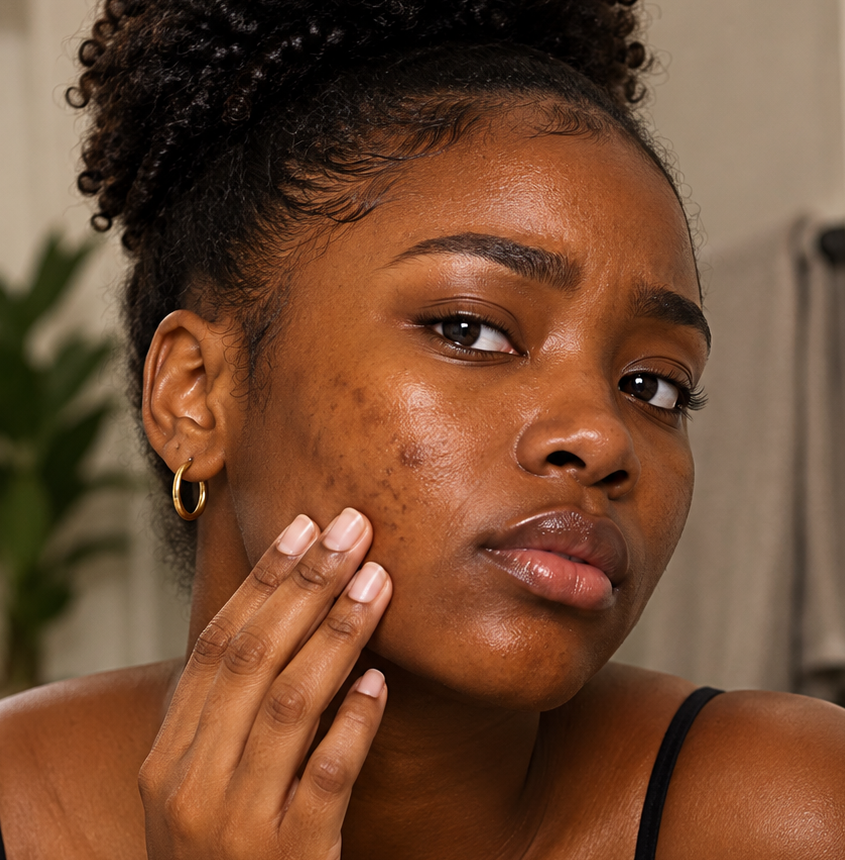
Understanding the Biology Behind Your Skin
Human skin exists in a remarkable spectrum of colors, and one of the most important biological factors responsible for this diversity is melanin.
For generations, many skincare conversations have focused on correcting skin concerns without first understanding the science behind different skin types. This has created confusion, myths, and sometimes harmful approaches to skincare.
The truth is that melanin is not a problem to fix. It is a biological feature to understand.
Melanin influences skin color, how our skin responds to sunlight, how pigmentation changes occur, and why certain concerns — such as dark spots and uneven skin tone — are more noticeable in some people with melanin-rich skin.
At Melanin Theory, we believe that better skincare begins with better understanding.
In this article, we will explore what melanin is, how the body produces it, why darker skin contains more pigment, and how understanding melanin can help you make better skincare decisions.
What Is Melanin?
Melanin is a natural pigment produced by specialized cells in the skin called melanocytes.
It is responsible for the color of:
Skin
Hair
Eyes
The amount, type, and distribution of melanin determine the natural pigmentation of an individual’s skin.
However, melanin is more than just a pigment that gives skin its color. It is part of a complex biological system involved in protecting the skin from environmental stress, especially ultraviolet (UV) radiation from the sun.
Inside the skin, melanin is produced and stored in tiny structures called melanosomes. These structures transport pigment from melanocytes to surrounding skin cells, where it contributes to visible skin color.
The process can be summarized as:
Melanocytes → Produce melanin → Store melanin in melanosomes → Transfer pigment to skin cells → Visible skin pigmentation
The Role of Melanocytes: Your Skin’s Pigment-Producing Cells
Melanocytes are specialized cells located in the deepest layer of the epidermis, the outermost layer of the skin.
Their primary function is to produce melanin through a process known as melanogenesis.
When the skin is exposed to factors such as ultraviolet radiation, melanocytes can increase melanin production as part of the body’s natural response.
The process involves several important steps:
1. The amino acid tyrosine is converted through biological reactions.
2. The enzyme tyrosinase plays an important role in melanin production.
3. Melanin is packaged inside structures called melanosomes.
4. Melanosomes transfer pigment to surrounding skin cells.
This biological process determines how much pigment is produced and how it appears on the skin.
Melanosomes: Understanding the Difference Between Skin Tones
A common misconception is that people with darker skin have significantly more melanocytes.
This is not accurate.
Most humans have a similar number of melanocytes. The differences between lighter and darker skin tones are mainly due to differences in:
The amount of melanin produced
The size of melanosomes
The amount of pigment stored
How long melanosomes remain active within skin cells
People with darker skin generally have larger melanosomes containing more eumelanin, and these melanosomes remain distributed within skin cells for longer periods.
This contributes to deeper skin pigmentation.
The Two Main Types of Melanin
Humans produce two main types of melanin:
1. Eumelanin
Eumelanin is the pigment responsible for brown and black coloration.
It is commonly associated with:
Darker skin tones
Brown eyes
Dark hair
Eumelanin has the ability to absorb and scatter some ultraviolet radiation, contributing to the skin’s natural defense system.
2. Pheomelanin
Pheomelanin produces yellow to reddish pigmentation.
It is associated with:
Lighter pigmentation
Red or lighter hair characteristics
Most individuals have a combination of both eumelanin and pheomelanin, but the balance between them differs from person to person.
Why Does Dark Skin Have More Melanin?
The variation in human skin color developed through thousands of years of human adaptation.
Populations living in areas with higher levels of ultraviolet radiation, particularly regions closer to the equator, developed higher levels of eumelanin as an adaptation to intense sunlight exposure.
Melanin helps absorb and scatter some UV radiation, reducing the impact of sunlight on skin cells.
However, an important point must be understood:
Melanin provides natural protection, but it does not make the skin immune to sun damage.
People with darker skin can still experience:
Sun-related aging
Hyperpigmentation
Uneven skin tone
Skin damage caused by UV exposure
This is why sun protection remains important for every skin tone.
How Melanin Influences Skin Health
Melanin affects several aspects of how skin behaves.
Melanin and Sun Protection
One of melanin’s important biological roles is helping protect skin cells from ultraviolet radiation.
Higher levels of melanin can provide some natural protection, but this protection is limited.
Sunscreen remains an important part of maintaining healthy skin because UV radiation can affect everyone.
Melanin and Aging
Melanin-rich skin often experiences visible aging differently compared to lighter skin tones.
Some studies suggest that higher melanin levels may provide some protection against certain aspects of photoaging caused by UV exposure.
However, darker skin still experiences natural aging processes, including:
Reduced collagen production
Changes in skin elasticity
Changes in skin texture
Healthy aging requires proper skincare regardless of skin tone.
Why Melanin-Rich Skin Is More Prone to Hyperpigmentation
One of the most important skincare topics connected to melanin is hyperpigmentation.
Hyperpigmentation occurs when certain areas of skin produce or retain more pigment than surrounding areas.
This can happen due to:
Acne inflammation
Skin injuries
Irritation
Hormonal changes
UV exposure
In melanin-rich skin, pigment-producing cells can respond strongly after inflammation, which may cause dark marks to remain visible for longer.
Common concerns include:
Acne marks
Dark spots
Uneven skin tone
Post-inflammatory hyperpigmentation
Understanding this helps explain why gentle skincare and proper treatment approaches are important.
Common Myths About Melanin
Myth 1: Dark Skin Does Not Need Sunscreen
Reality:
Melanin provides some natural UV protection, but it does not block all ultraviolet radiation.
Sunscreen helps protect against:
UV-related skin damage
Premature aging
Pigmentation changes
Myth 2: Dark Skin Does Not Age
Reality:
All skin ages.
However, signs of aging may appear differently depending on genetics, environment, lifestyle, and skin biology.
Myth 3: More Melanin Means Perfect Skin
Reality:
Melanin affects pigmentation, but it does not prevent all skin concerns.
Melanin-rich skin can still experience:
Acne
Dryness
Sensitivity
Irritation
Inflammation
Healthy skin depends on many factors beyond pigmentation.
What Does Melanin-Rich Skin Need From Skincare?
The goal of skincare should not be changing your natural skin color.
The goal should be supporting healthy, balanced skin.
Important principles include:
1. Protect Your Skin Barrier
A healthy skin barrier helps maintain:
Moisture balance
Protection from irritants
Overall skin comfort
2. Understand Ingredients
Certain skincare ingredients have been studied for concerns related to uneven skin tone and pigmentation, including:
Niacinamide
Vitamin C
Azelaic acid
Retinoids
However, skincare should always be personalized because different skin types respond differently.
3. Practice Sun Protection
Sun protection remains one of the most important steps in maintaining healthy skin.
The Melanin Theory Perspective
At Melanin Theory, we believe skincare begins with knowledge.
Your skin is not something that needs to be changed to fit a standard.
Your skin is a biological system with its own characteristics, needs, and strengths.
Melanin represents human adaptation, diversity, and protection. Understanding how it works allows us to make smarter decisions about:
Skincare ingredients
Products
Daily routines
Skin health
The future of skincare is not about chasing unrealistic ideals.
It is about personalized, science-based care.
Key Takeaways
Melanin is a natural pigment responsible for skin, hair, and eye color.
Melanocytes produce melanin and package it inside melanosomes.
Differences in skin tone are mainly caused by differences in melanin production and distribution.
Melanin provides some natural protection against UV radiation but does not replace sunscreen.
Melanin-rich skin may experience noticeable pigmentation changes after inflammation.
Understanding your skin biology is the foundation of better skincare.
Leave a Reply