Author: Stephen

  • Why Does Your Face Get Oily So Quickly After Washing?

    Why Does Your Face Get Oily So Quickly After Washing?

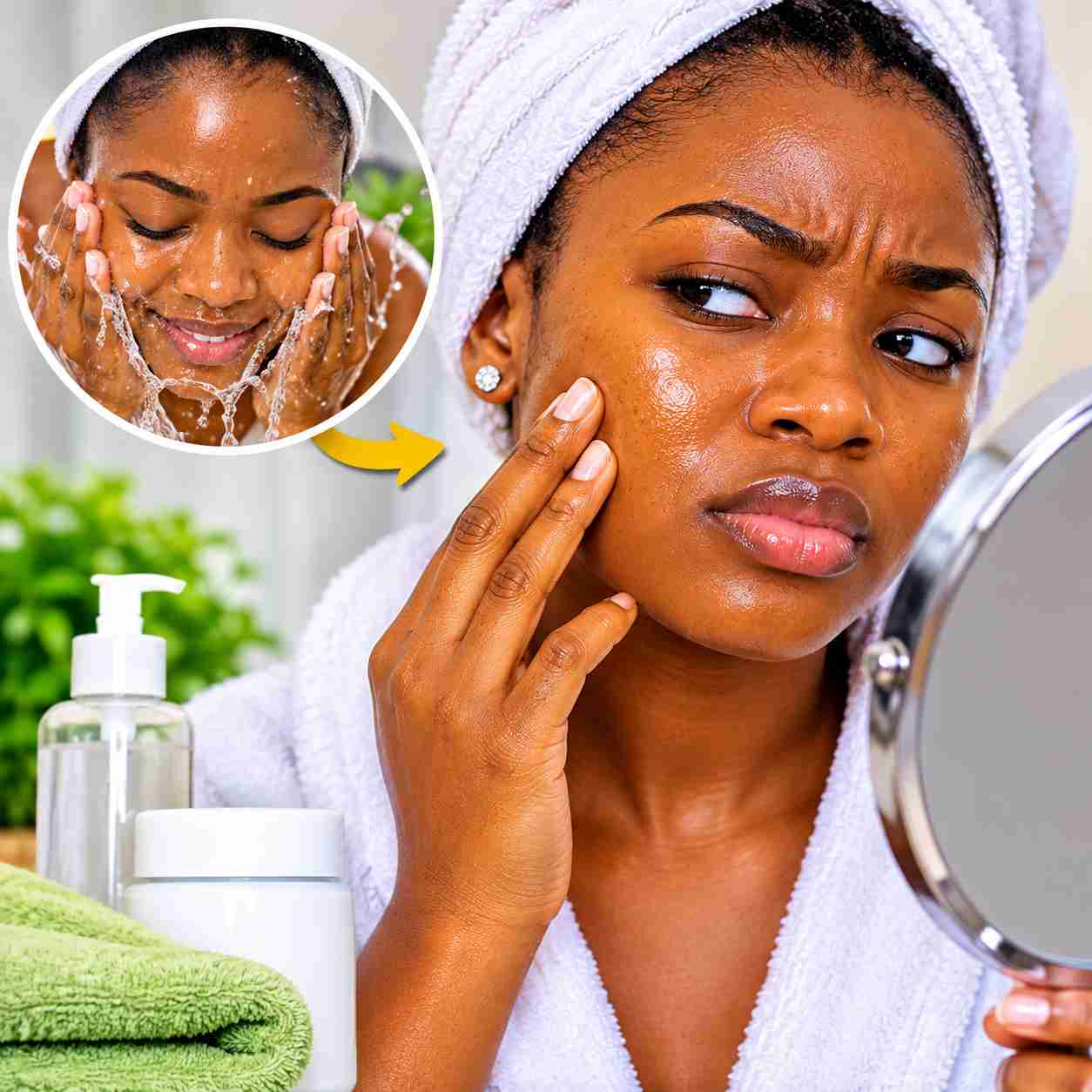
    You wash your face, pat it dry and enjoy that clean feeling. But barely an hour or two later, your forehead and nose are shiny again.

    Sound familiar?

    If your face gets oily quickly after washing, your first instinct might be to wash it again or switch to a stronger cleanser. But that may not solve the problem.

    Your skin naturally produces oil. The key is understanding why it becomes noticeable so quickly—and how to manage it without irritating your skin.

    If you are still building your skincare foundation, our complete guide to skincare for melanin-rich skin in Kenya explains the fundamentals of caring for your skin and choosing products that support its needs.

    1. Why does your face become oily again after washing?

    Your skin contains tiny structures called sebaceous glands, which produce an oily substance known as sebum.

    Sebum helps protect the skin surface and reduce moisture loss. It is a normal part of healthy skin function.

    When you wash your face, you remove some of the oil sitting on the surface. However, your sebaceous glands continue producing sebum. As it reaches the skin surface, your face can become shiny again.

    This is why washing your face does not permanently remove oiliness.

    Sebum production is influenced by several factors, particularly genetics and hormones. Androgens, for example, stimulate sebaceous gland activity.

    The important distinction: having oily skin is not automatically a sign that your skin is dirty or unhealthy. The goal is to manage excess shine while maintaining a healthy skin barrier.

    Scientific reference: DermNet – Sebum.

    2. Six reasons your face may get oily so quickly

    1. Genetics

    Your genes influence the size and activity of your sebaceous glands. Some people naturally produce more sebum than others.

    If oily skin runs in your family, your skin may simply have a greater tendency to become shiny throughout the day.

    2. Hormonal changes

    Hormones can influence how much sebum your skin produces.

    Oiliness may become more noticeable during puberty, around certain stages of the menstrual cycle, or during other hormonal changes.

    This is one reason why your skin may not behave the same way throughout the month.

    3. Using a cleanser that is too harsh

    A cleanser that leaves your face feeling extremely tight, dry or uncomfortable may be too harsh for your skin.

    Aggressive cleansing and scrubbing can irritate the skin. Some harsh products may also worsen oiliness rather than improve it.

    Do not confuse the feeling of being completely stripped of oil with effective cleansing.

    A good cleanser should remove dirt, sweat and excess surface oil without leaving your skin uncomfortable.

    If you are unsure whether your products are being used in the right sequence, read our guide to applying skincare products in the correct order. A well-structured routine can help you avoid unnecessary steps and product overload.

    Scientific reference: American Academy of Dermatology – How to Control Oily Skin.

    4. Heat, humidity and sweating

    Hot weather, physical activity and humid conditions can make your face feel increasingly greasy.

    However, not all the moisture or shine you notice is sebum.

    Sweat and sebum are different substances. Sweat comes from sweat glands, while sebum is produced by sebaceous glands. They can mix on the skin surface, making your face feel even greasier.

    This may explain why your skin feels oilier on a hot afternoon than it does in the morning.

    5. Skincare products that do not suit your skin

    Some products may feel too heavy for your skin or contribute to clogged pores.

    For oily or acne-prone skin, consider products labelled:

    • Oil-free.
    • Non-comedogenic.
    • Won’t clog pores.

    These labels can help guide your choices, although no product is guaranteed to suit everyone.

    6. An overly complicated skincare routine

    Using several exfoliating products, strong cleansers and acne treatments at the same time can irritate your skin.

    More products do not necessarily mean better results.

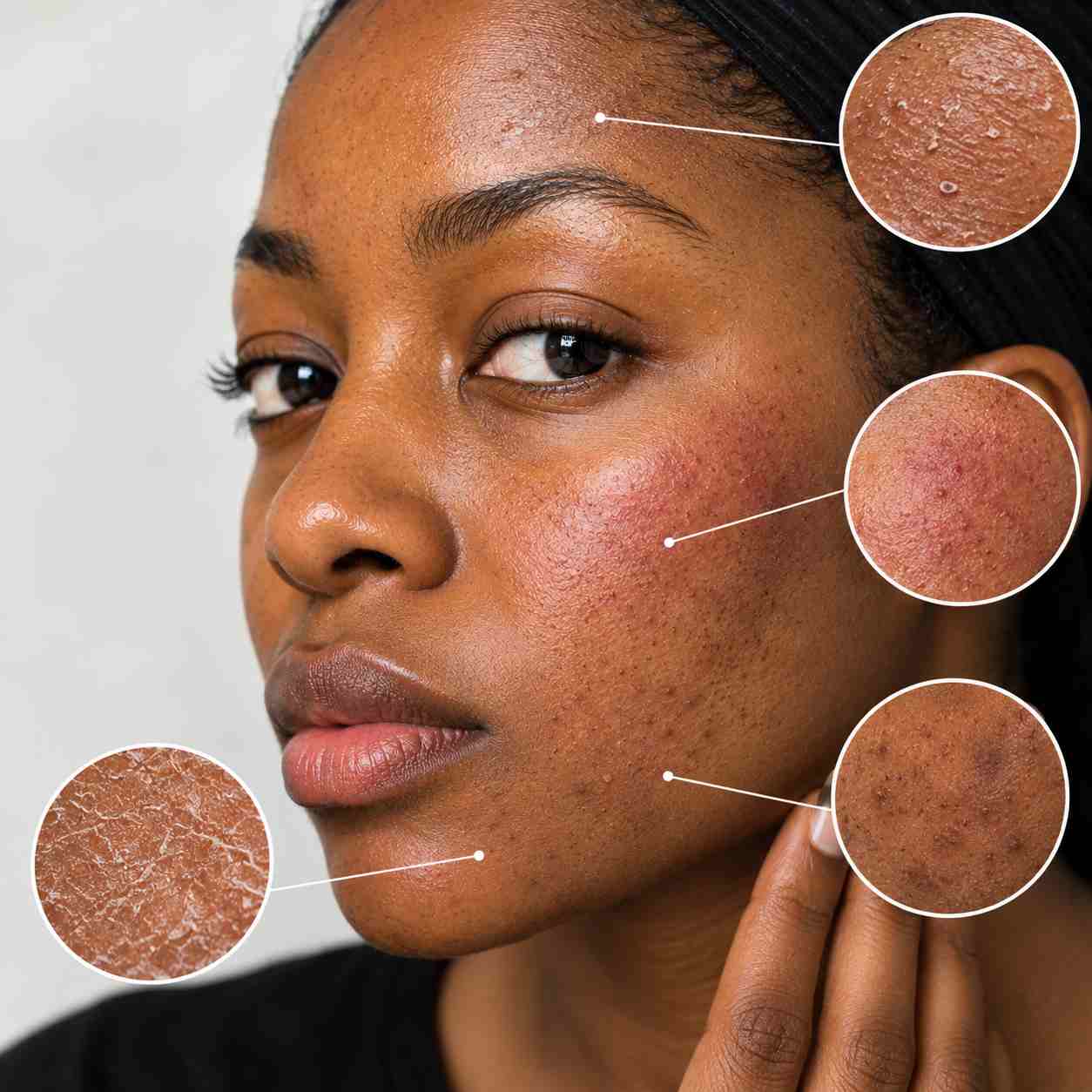
    If your face feels oily but also stings, becomes tight or starts peeling, consider whether your routine is too aggressive.

    3. Is your skin naturally oily or becoming irritated?

    Oily skin and irritated skin can sometimes occur together, but they are not the same thing.

    Pay attention to the following differences:

    What you noticeWhat it may suggest
    Shine across the forehead, nose and cheeksNaturally oily skin
    Shine mainly around the forehead and nosePossible combination skin
    Oiliness with blackheads or clogged poresOiliness alongside comedonal acne
    Tightness, stinging or peeling after cleansingPossible irritation or dryness
    Burning, persistent redness or discomfortPossible skin irritation requiring attention

    These signs are clues, not a diagnosis. Oily skin can also be sensitive, and acne cannot be diagnosed from shine alone.

    If your face feels uncomfortable after washing, do not respond by cleansing more frequently. Reconsider the products you are using.

    4. How to manage oily skin without damaging your skin barrier

    You do not need to eliminate all your skin’s natural oil. Instead, focus on reducing excess shine, preventing clogged pores and keeping your skin comfortable.

    Choose a gentle cleanser

    Wash your face using a mild, non-abrasive cleanser.

    Use lukewarm water and your fingertips rather than scrubbing with a rough washcloth or cleansing brush.

    For most people, cleansing up to twice daily and after heavy sweating is sufficient.

    Scientific reference: AAD – Face Washing 101.

    Consider ingredients that address your actual concern

    Not every skincare ingredient performs the same function.

    Salicylic acid

    Salicylic acid is a beta-hydroxy acid (BHA) that helps loosen the buildup of dead skin cells inside pores. It can be useful for people experiencing blackheads and clogged pores.

    Start with a suitable, lower-strength product and introduce it gradually. Excessive use can cause dryness and irritation.

    Niacinamide

    Niacinamide, a form of vitamin B3, supports the skin barrier and can help improve uneven skin tone. Some research also suggests it may help reduce visible oiliness.

    It is a useful option to consider, particularly when your routine needs a gentle, multi-purpose ingredient. However, results vary.

    Glycolic acid

    Glycolic acid is an alpha-hydroxy acid (AHA) that exfoliates the skin surface. It may help improve uneven texture and the appearance of post-inflammatory marks.

    It is not a primary oil-control ingredient, and frequent or excessive use can irritate the skin.

    You do not need all three ingredients. Choose based on your main concern and introduce only one new active product at a time.

    Before choosing an ingredient, it helps to understand what it actually does. You can explore the Melanin Theory Ingredient Library for more explanations of skincare ingredients, their functions and their suitability for different skin concerns.

    Do not skip moisturiser

    Having oily skin does not automatically mean your skin has enough water or does not need moisturising.

    A lightweight, oil-free or non-comedogenic moisturiser may help maintain skin comfort, particularly if you use acne treatments or exfoliating ingredients.

    Choose a texture that feels comfortable on your skin. You do not need a heavy cream if a lighter lotion or gel works better.

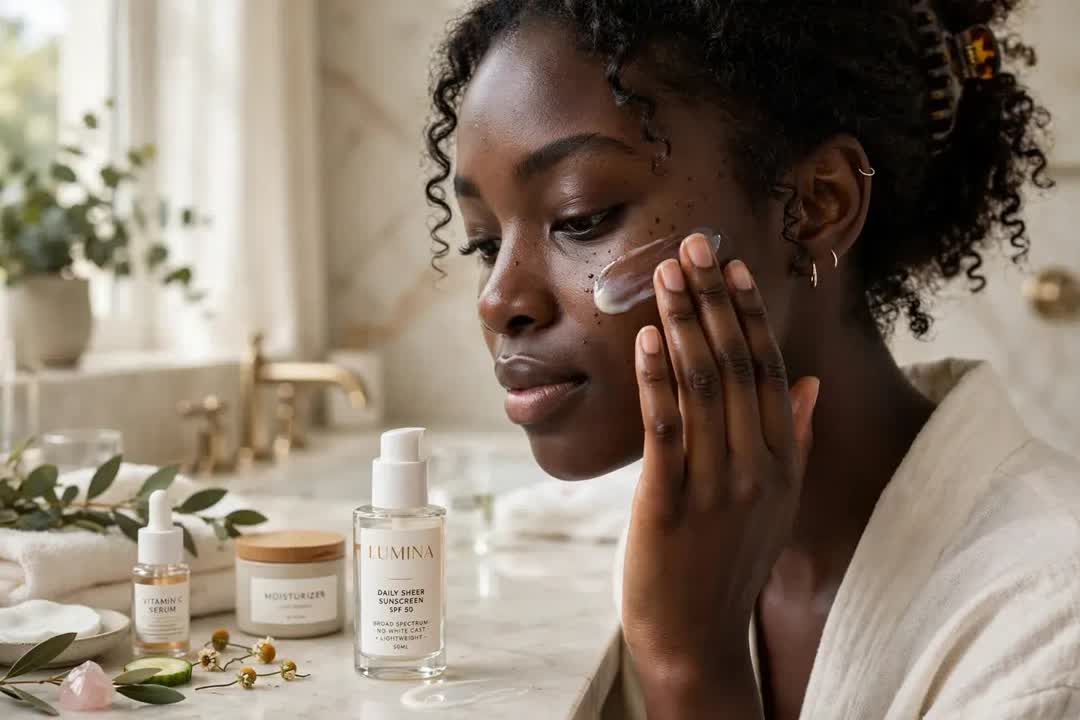
    Wear sunscreen every morning

    Sunscreen is important even when your main concern is oiliness.

    Choose a broad-spectrum sunscreen with SPF 30 or higher. If you are prone to clogged pores, look for a formula labelled non-comedogenic.

    For melanin-rich skin, protecting against UV exposure is particularly important when managing uneven pigmentation and dark marks.

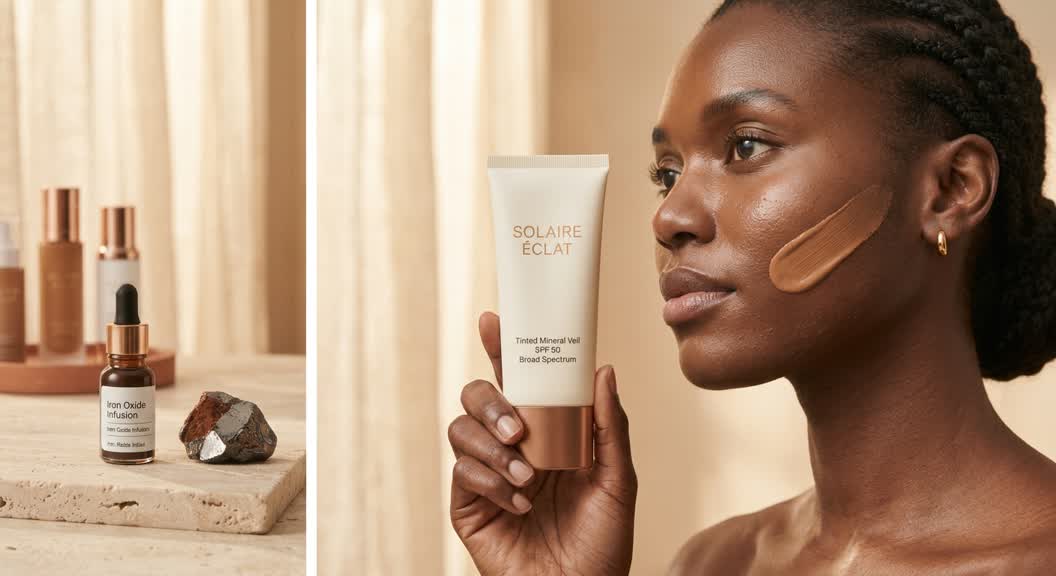
    A tinted sunscreen containing iron oxides may also provide additional protection against visible light, which can contribute to pigmentation in some people.

    Scientific reference: American Academy of Family Physicians – Dermatologic Conditions in Skin of Color.
    Use blotting papers when necessary

    If your face becomes shiny during the day, blotting papers can absorb some surface oil without requiring another full face wash.

    Gently press the paper against oily areas. Avoid rubbing it across your skin.

    Remember: blotting papers temporarily remove surface oil; they do not reduce the amount your sebaceous glands produce.

    5. A simple skincare routine for oily skin

    You do not need a complicated routine to manage oily skin.

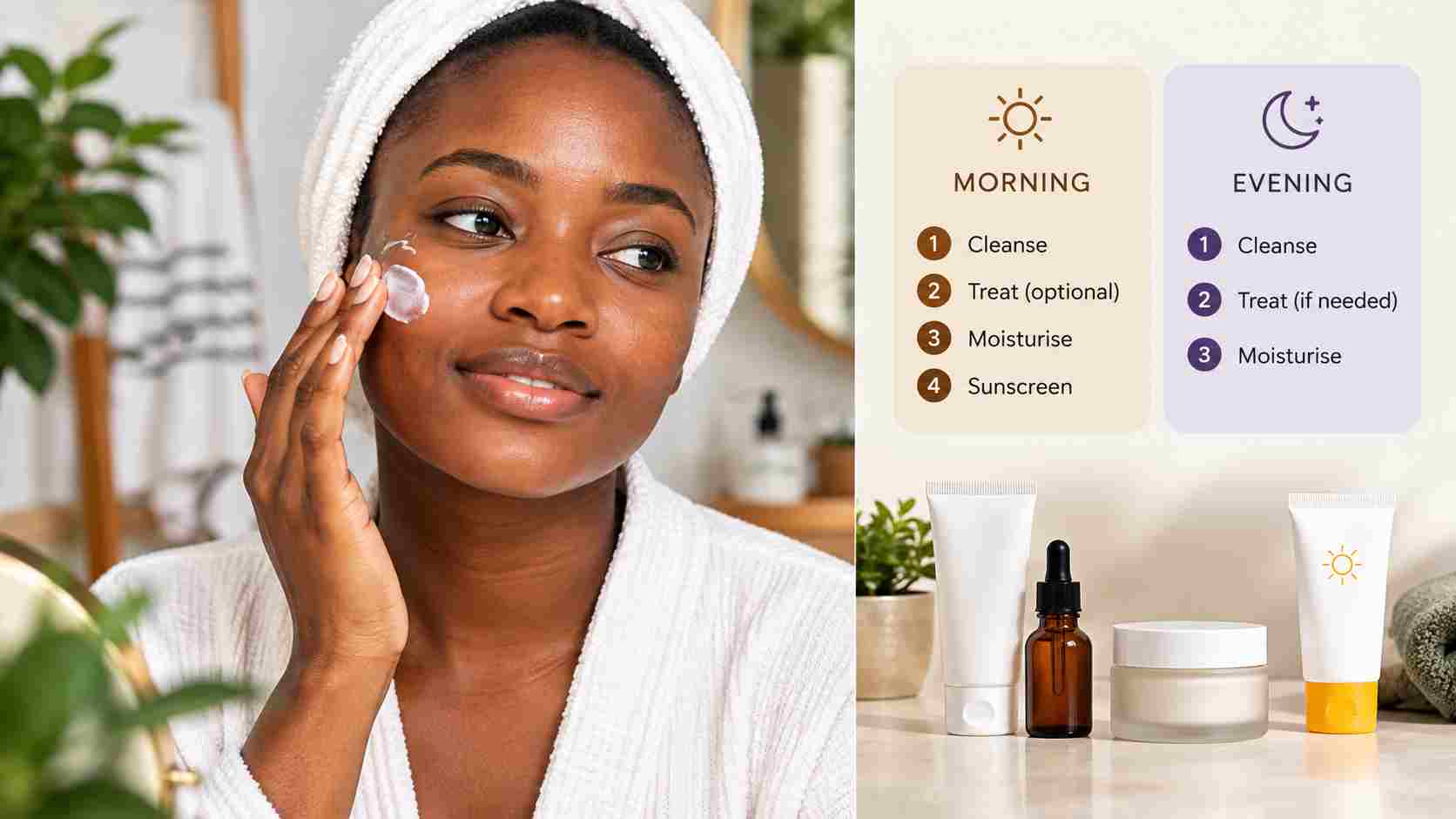
    Morning

    1. Cleanse with a gentle face wash.
    2. Apply a suitable moisturiser.
    3. Finish with broad-spectrum SPF 30 or higher sunscreen.

    Evening

    1. Cleanse to remove sunscreen, dirt and accumulated oil.
    2. Apply one suitable treatment ingredient if needed.
    3. Finish with moisturiser.

    If you are new to active ingredients, begin slowly. Avoid introducing several exfoliating products at once.

    Consistency and tolerability matter more than having a long product list.

    6. Why this matters for melanin-rich skin

    For people with melanin-rich skin, managing oily skin is not only about reducing shine.

    Acne, irritation and other forms of skin inflammation can leave behind dark marks known as post-inflammatory hyperpigmentation (PIH).

    This means that aggressive cleansing, picking at breakouts or using too many irritating products can create another problem while you are trying to solve the first one.

    A better approach is to manage oiliness while protecting the skin barrier and avoiding unnecessary inflammation.

    If dark marks are also a concern, understanding the role of your skin barrier is important. Our guide to repairing a damaged skin barrier explores why barrier care matters and how to avoid common skincare mistakes.

    If you are unsure which skincare concerns or routine steps deserve your attention, the Melanin Theory Skin Assessment can help you explore a more personalised skincare approach.

    If you are experiencing persistent acne, painful breakouts or dark marks that do not improve, a dermatologist can help identify an appropriate treatment.

    Scientific reference: AAD – 10 Tips for Clearing Acne in Darker Skin Tones.

    7. When should you seek professional advice?

    Occasional shine is normal. However, consider speaking to a dermatologist or qualified healthcare professional if you experience:

    • Persistent or worsening acne.
    • Painful, deep or inflamed breakouts.
    • Severe irritation, burning or peeling.
    • A sudden and unusual change in oiliness, especially alongside other symptoms.
    • Dark marks that continue to develop or cause concern.

    A professional can help distinguish ordinary oily skin from acne, irritation or another underlying skin condition.

    Frequently asked questions

    Why does my face get oily one hour after washing?

    Your sebaceous glands continue producing sebum after cleansing. If your skin naturally produces more oil, shine may return relatively quickly.

    Should I wash my face whenever it becomes oily?

    No. Repeated washing can irritate your skin. For most people, cleansing up to twice daily and after heavy sweating is sufficient. Use blotting papers if you need to manage shine between washes.

    Does oily skin need moisturiser?

    Yes, if your skin needs it. Choose a lightweight formula that suits your skin. Oil production and skin hydration are not the same thing.

    Does drinking more water stop oily skin?

    Drinking enough water supports general health, but there is no good evidence that simply drinking extra water switches off sebaceous gland activity or directly stops oily skin.

    Can oily skin still have dark spots?

    Yes. Oily skin can also experience acne and inflammation, which may leave post-inflammatory hyperpigmentation. Managing breakouts and avoiding irritation are important parts of preventing additional marks.

    Final thoughts

    If your face becomes oily shortly after washing, the answer is not necessarily a stronger cleanser or more frequent washing.

    Your skin naturally produces sebum, and the amount varies between individuals.

    Focus on gentle cleansing, suitable ingredients, lightweight moisturising and daily sun protection. Most importantly, avoid treating natural oil production as something your skin needs to eliminate completely.

    Healthy skincare is about balance—not stripping your skin until it feels completely dry.


    References

    1. American Academy of Dermatology. How to Control Oily Skin.
    2. American Academy of Dermatology. Face Washing 101.
    3. DermNet. Sebum.
    4. American Academy of Dermatology. 10 Tips for Clearing Acne in Darker Skin Tones.
    5. American Academy of Family Physicians. Dermatologic Conditions in Skin of Color.

  • How to Apply Skincare Products in the Correct Order: Morning and Night Routine for Beginners

    How to Apply Skincare Products in the Correct Order: Morning and Night Routine for Beginners

    Have you ever wondered whether serum goes before moisturiser, when to use retinol, or whether exfoliation belongs in your morning or evening routine?

    The correct skincare routine order helps you use products effectively without making your routine unnecessarily complicated. But getting the order right is only part of the picture. Choosing suitable products—and avoiding irritation—is just as important.

    At Melanin Theory (MT), we approach skincare through evidence, practical education and the needs of melanin-rich skin. When irritation causes inflammation, it can leave dark marks known as post-inflammatory hyperpigmentation (PIH). This is one reason why aggressive exfoliation and using too many active ingredients can be counterproductive.

    This guide explains the correct order of skincare products in the morning and at night, when to use exfoliators and retinol, and how to build a routine that works for your skin.

    The correct skincare routine order at a glance

    Morning skincare routineEvening skincare routine
    1. Gentle cleanser, if needed1. Gentle cleanser
    2. Optional serum or treatment2. Targeted treatment, if appropriate
    3. Moisturiser3. Moisturiser
    4. Sunscreen (SPF 30+)

    This is a basic guide, not a rule that every person must follow exactly. Some treatments have specific application instructions, and prescribed medication should be used as directed.

    The principle: cleanse first, apply appropriate treatments, moisturise, and finish your morning routine with sunscreen.

    You do not need a cleanser, toner, several serums, an exfoliator, retinol and a face mask to have healthy skin. Start with the essentials and add products only when they address a genuine need.

    For more guidance, see the American Academy of Dermatology’s advice on skincare application order.

    1. What is the correct morning skincare routine order?

    Your morning routine should help maintain the skin barrier and protect your skin from ultraviolet (UV) radiation and other environmental exposure.

    Step 1: Cleanser

    A gentle cleanser removes excess oil, sweat and residue without unnecessarily stripping the skin.

    Choose according to how your skin behaves:

    • Oily or acne-prone skin: Consider a gentle cleanser that removes excess oil without leaving your face tight.
    • Dry skin: A mild, non-stripping cleanser may be more comfortable.
    • Sensitive skin: Consider a fragrance-free cleanser formulated for sensitive skin.
    • Combination skin: Choose a gentle formula that cleanses without leaving dry areas uncomfortable.

    Most people benefit from cleansing in the evening. A morning cleanse may also help, but if your skin is very dry or sensitive, rinsing with water may be sufficient for you.

    Avoid harsh scrubbing and very hot water. A cleanser should leave your skin feeling clean, not painfully tight or irritated.

    Read the AAD guide to washing your face.

    Step 2: Serum or targeted treatment (optional)

    Serums are products designed to deliver particular ingredients. They are optional, and you do not need one simply because it is popular.

    Choose an ingredient according to your concern:

    • Niacinamide: May help support the skin barrier and improve the appearance of uneven skin tone.
    • Vitamin C: An antioxidant used in some routines to address uneven tone and help protect against oxidative stress.
    • Azelaic acid: Can help with certain forms of acne and post-inflammatory hyperpigmentation.

    The results depend on the formulation, concentration, consistency of use and the cause of the skin concern. An ingredient is not automatically suitable for every skin type.

    If you are new to active ingredients, introduce one product at a time. This makes it easier to identify the cause if irritation develops.

    MT principle: Understand the skin concern first, then choose the ingredient. Do not build a routine around a list of trending ingredients.

    Explore the Melanin Theory Ingredient Library to learn what individual ingredients do before deciding whether they belong in your routine.

    Step 3: Moisturiser

    Moisturiser helps reduce water loss and supports the skin barrier. It can also make a routine more comfortable when using certain treatments.

    • Lightweight lotions or gels may suit people who prefer a less heavy feel.
    • Creams may be more comfortable for dry skin.
    • Fragrance-free formulas may be preferable if fragrance tends to irritate your skin.

    Oily skin can still benefit from moisturising. The goal is to find a suitable formula, not to eliminate moisture from your routine.

    If your skin frequently stings, flakes or feels tight, simplify your routine and focus on gentle cleansing and moisturising before introducing more active ingredients.

    Step 4: Sunscreen

    Sunscreen is the final step of your morning skincare routine, before makeup.

    Choose a sunscreen with:

    • SPF 30 or higher.
    • Broad-spectrum protection against UVA and UVB radiation.
    • Water resistance if you will be swimming or sweating.

    Apply enough to cover all exposed skin evenly, following the product instructions. Reapply approximately every two hours when outdoors and after swimming or heavy sweating. Shade, a hat and protective clothing can provide additional protection.

    Why sunscreen matters for melanin-rich skin

    Melanin provides some natural protection against UV radiation, but it does not eliminate the risk of sun damage or hyperpigmentation.

    Sun exposure can worsen some dark spots and pigmentation conditions. If pigmentation is a major concern, a tinted sunscreen containing iron oxides may offer additional protection against visible light, which can worsen pigmentation in some people with darker skin tones.

    Not every tinted sunscreen contains iron oxides, so check the ingredient list. Choose a formula that blends comfortably with your skin tone and that you can use consistently.

    For more detail, read the AAD’s guide to fading dark spots in darker skin tones.

    2. What is the correct evening skincare routine order?

    Your evening routine removes the day’s buildup and gives you an opportunity to use a targeted treatment if you need one.

    Step 1: Cleanser

    Cleanse your face to remove sweat, excess oil, sunscreen and makeup.

    If you use heavy or water-resistant makeup or sunscreen, an additional first cleansing step may help remove it. However, double cleansing is not necessary for everyone. If one gentle cleanser removes your products effectively, that may be enough.

    Avoid repeated washing or aggressive scrubbing. These can aggravate dryness and irritation.

    Step 2: Targeted treatment, if needed

    After cleansing, apply an appropriate treatment according to its instructions. Examples include treatments for acne, uneven pigmentation or other specific concerns.

    The correct product depends on the problem you are treating. Acne, dark marks and irritation may look similar to a beginner but require different approaches.

    Do not introduce several strong treatments at once. A complicated routine can make it difficult to determine which product is helping and which is causing a reaction.

    Step 3: Moisturiser

    Finish with a suitable moisturiser to help maintain hydration and support the skin barrier.

    If a treatment makes your skin dry, a moisturiser may improve comfort. Follow the treatment’s specific directions, especially if it is prescribed.

    An important MT reminder: Burning, persistent stinging, swelling, marked redness or worsening peeling should not be treated as proof that a product is working. Stop using a product that appears to be irritating your skin. If the reaction is severe or does not settle, seek professional advice.

    For melanin-rich skin, preventing unnecessary inflammation is particularly important because irritation can trigger or worsen dark marks.

    3. Where does an exfoliator fit in the skincare routine?

    Exfoliation helps remove dead skin cells from the surface or encourages their shedding, depending on the product.

    There are two main categories:

    • Physical exfoliators: Use particles or tools to remove surface cells.
    • Chemical exfoliators: Use ingredients such as alpha-hydroxy acids (AHAs) or beta-hydroxy acids (BHAs).

    For a typical leave-on chemical exfoliant, the sequence is usually cleanser, exfoliant, then moisturiser. Rinse-off products should be used according to their instructions.

    How often should beginners exfoliate?

    There is no single frequency that suits everyone. It depends on the ingredient, concentration, formulation and your skin’s tolerance.

    If you choose to exfoliate:

    1. Start conservatively and follow the product instructions.
    2. Avoid introducing several exfoliating products at the same time.
    3. Do not exfoliate skin that is already irritated, cracked or unusually sensitive.
    4. Reduce or stop use if persistent dryness, burning or peeling develops.

    For beginners, it is often sensible to introduce an exfoliant on a different evening from retinol or another potentially irritating treatment. This is a cautious starting strategy, not a universal rule that these ingredients can never be combined.

    Why extra caution matters for melanin-rich skin

    Aggressive exfoliation can damage the skin barrier and cause inflammation. In people prone to post-inflammatory hyperpigmentation, that inflammation may leave dark marks that take months to fade.

    Exfoliation is not essential for everyone, and stronger products do not automatically produce better results.

    Read the AAD’s guidance on how to exfoliate safely at home.

    4. What is the correct skincare order when using retinol?

    Retinol is a type of retinoid, a group of vitamin A-related ingredients used in skincare. Depending on the product and concern, retinoids may help manage acne, uneven texture and some forms of pigmentation.

    They are not essential for every routine.

    A beginner’s retinol routine

    For a typical over-the-counter retinol product, the sequence may be:

    1. Gentle cleanser.
    2. Retinol, according to the product’s instructions.
    3. Moisturiser.

    Some people with sensitive skin may tolerate retinol better when they use moisturiser before or alongside it, if the product instructions permit. If a clinician has prescribed a retinoid, follow their directions.

    How should beginners introduce retinol?

    • Choose a suitable, lower-strength over-the-counter product.
    • Start with infrequent use as directed, rather than immediately using it every night.
    • Avoid adding several other potentially irritating treatments at the same time.
    • Use moisturiser and maintain sun protection.
    • Stop or reduce use if significant irritation develops, and seek advice if symptoms persist.

    Retinoids are not suitable for everyone. People with significant dryness, sensitive or inflamed skin, or certain skin conditions should seek professional guidance before starting one.

    Do not use retinoids during pregnancy. If you are pregnant or planning pregnancy, ask a qualified healthcare professional about appropriate alternatives. If you are breastfeeding, discuss suitability with your healthcare professional.

    Retinol is not a quick fix for dark marks. The priority is to avoid irritation and choose a treatment appropriate for the cause of the pigmentation.

    Read the AAD’s explanation of retinoids and retinol.

    5. Where does a face mask fit in the skincare routine?

    The correct order depends on the type of mask.

    For a typical rinse-off mask:

    1. Cleanser.
    2. Face mask.
    3. Rinse as directed.
    4. Moisturiser.

    Some leave-on masks are designed to be used as the final moisturising step. Follow the manufacturer’s instructions rather than assuming every mask works in the same way.

    Be careful with masks containing exfoliating acids or other strong active ingredients, especially if you already use retinol or exfoliants. Combining several potentially irritating products in one session can increase the chance of a reaction.

    A face mask is optional. It does not replace cleansing, moisturising or sunscreen, and you do not need one to maintain healthy skin.

    6. A simple daily skincare routine for beginners

    If you are starting from scratch, do not buy a complete shelf of products. Establish a basic routine first.

    Morning

    1. Gentle cleanser, or a water rinse if appropriate for your skin.
    2. Moisturiser if needed.
    3. Broad-spectrum SPF 30+ sunscreen.

    Evening

    1. Gentle cleanser.
    2. Moisturiser.
    3. One targeted treatment if there is a clear reason to use it and your skin tolerates it.

    A treatment can be introduced into this routine when you understand your main concern and have chosen a suitable product.

    How to decide what to add next

    • Your skin feels tight, flaky or uncomfortable: Focus on gentle cleansing and moisturising. Pause irritating actives until your skin settles.
    • You have persistent acne: Choose a treatment suited to acne rather than adding random exfoliators. Seek professional advice for painful, scarring or persistent acne.
    • You have dark marks after pimples or irritation: Prioritise preventing further inflammation and using sunscreen. Consider a suitable pigmentation treatment if needed.
    • You are unsure what is causing the problem: Avoid stacking multiple treatments. Seek advice from a qualified healthcare professional if the issue persists or is worsening.

    This is the approach we want readers to take at Melanin Theory: identify the concern, choose a suitable solution, introduce it carefully, and evaluate the response.

    7. Common skincare routine mistakes to avoid

    Using too many products at once. More products mean more opportunities for irritation and make it harder to identify the cause of a reaction.

    Skipping moisturiser because your skin is oily. Oily skin can still become irritated or dehydrated.

    Exfoliating too frequently. Excessive exfoliation can damage the skin barrier and worsen dark marks.

    Treating irritation as progress. Persistent burning or stinging is a reason to reassess a product, not push through it.

    Expecting dark spots to disappear overnight. Pigmentation can take months to fade, depending on its cause and depth.

    Skipping sunscreen while treating pigmentation. Sun exposure can undermine your efforts to prevent or manage dark spots.

    Buying products before identifying your concern. A product that works for one person may not suit another. Choose according to your skin, the concern and the evidence supporting the product.

    Frequently asked questions

    What is the correct order to apply skincare products?

    A basic morning routine is cleanser, optional serum or treatment, moisturiser and sunscreen. At night, use cleanser, an appropriate treatment if needed, and moisturiser. Product-specific instructions may change the order.

    Should I apply serum before or after moisturiser?

    Many serums are applied before moisturiser. However, follow the instructions for your particular product. A serum is optional if your basic routine already meets your needs.

    Should I exfoliate before or after moisturiser?

    A typical exfoliating product is used after cleansing and before moisturiser. Rinse-off products and leave-on products have different instructions, so check the label.

    Should I use retinol every night?

    Not necessarily. Beginners should introduce retinol gradually and follow the product instructions. Frequency depends on the product and your skin’s tolerance.

    Can I use retinol and an exfoliator together?

    Some skincare regimens may combine them, but doing so can increase irritation, particularly for beginners. Start by using them on separate evenings, and do not introduce either product while your skin is already irritated. Seek professional guidance if you are unsure whether the combination suits your skin.

    Can oily skin skip moisturiser?

    Not necessarily. Oily skin can still benefit from moisturising. Choose a comfortable formula that suits your skin and does not worsen your concerns.

    How long does a skincare routine take to work?

    It depends on the concern and treatment. Hydration may improve relatively quickly, while acne and pigmentation often require weeks or months. Avoid increasing product strength or frequency simply because results are not immediate.

    Final thoughts: Build a routine around your skin

    The correct skincare routine order helps you use products sensibly, but the best routine is not the one with the most steps. It is the one that addresses your needs, protects your skin barrier and is practical enough to follow consistently.

    For melanin-rich skin, managing irritation is especially important because inflammation can contribute to persistent dark marks. Start with gentle cleansing, moisturising and sunscreen. Add targeted treatments only when you understand why you need them.

    At Melanin Theory, our approach is simple: understand your skin, choose evidence-informed ingredients, and build a routine you can sustain.

    Ready to learn more? Explore the Melanin Theory Skin Assessment to help identify your skincare priorities, or visit our Ingredient Library to understand the ingredients behind your routine.


    SEO settings

    SEO title: How to Apply Skincare Products in the Correct Order

    Focus keyphrase:

    Suggested slug: skincare-routine-order

    Meta description:

    Suggested excerpt: Not sure what order to apply skincare products? Learn a simple morning and night routine, when to use exfoliators and retinol, and how to avoid irritation.

    Sources

    1. American Academy of Dermatology. Should I apply my skin care products in a certain order?
    2. American Academy of Dermatology. Face washing 101
    3. American Academy of Dermatology. How to safely exfoliate at home
    4. American Academy of Dermatology. Retinoid or retinol?
    5. American Academy of Dermatology. How to fade dark spots in darker skin tones
    6. Cleveland Clinic. The correct order for skin care products

  • Why Do You Get Tiny Bumps on Your Forehead? Causes and What May Help

    Why Do You Get Tiny Bumps on Your Forehead? Causes and What May Help

    Have tiny bumps taken over your forehead, even though you keep trying new skincare products? Before buying another exfoliant or acne treatment, consider this: the bumps might be caused by clogged pores, your hair products, or inflammation around the hair follicles.

    For people with melanin-rich skin, there is another reason to choose treatments carefully: inflammation and irritation can leave dark marks that remain long after the bumps improve.

    The key is to identify the likely cause before treating it. Here is what may be behind your forehead bumps, which ingredients have evidence for treating acne, and when to seek professional advice.

    1. What Do Tiny Bumps on Your Forehead Look Like?

    The appearance of tiny bumps on your forehead can provide clues, but it cannot confirm the diagnosis.

    • Small, skin-coloured or white bumps: These may be closed comedones, a type of acne caused by blocked hair follicles.
    • Bumps concentrated around your hairline: Hair oils, pomades, and styling products may contribute to product-related acne.
    • Similar-looking, itchy bumps: Folliculitis, which involves inflammation of hair follicles, is one possibility.
    • Bumps accompanied by burning, tightness, or flaking: Irritation from skincare products may be contributing.

    On melanin-rich skin, inflammation may look brown, purple, or darker than your usual skin tone rather than bright red.

    These signs are clues, not a diagnosis. Acne, folliculitis, and irritation can look similar but may require different treatments.

    2. What Causes Tiny Bumps on Your Forehead?

    Understanding the cause of tiny bumps on your forehead can help you avoid unnecessary products and treatments.

    Clogged pores and tiny bumps on your forehead

    Oil and dead skin cells can accumulate inside hair follicles, forming closed comedones. These bumps often feel like small, uneven patches on the skin.

    Some skincare and hair-care products can contribute to blocked pores. If the bumps appeared after introducing a new product, consider whether it could be a trigger. Products labelled non-comedogenic may be a useful choice, although no label guarantees that a product will suit everyone.

    Hair products and tiny bumps on your forehead

    Hair oils, pomades, conditioners, gels, and waxes can leave residue around the hairline. The American Academy of Dermatology identifies oils in hair-care products as a cause of small breakouts along the forehead and hairline.

    If you suspect your hair products are responsible, keep them away from your forehead, rinse conditioner thoroughly, and wash pillowcases and headwear regularly. Give your skin time to respond after removing the suspected trigger.

    Source: American Academy of Dermatology — Hair-care products and breakouts.

    Sweat, friction, and tiny bumps on your forehead

    Sweat, tight headwear, and repeated rubbing may aggravate some skin conditions, especially during exercise or in warm weather.

    Gently cleanse after heavy sweating and avoid scrubbing your forehead. Sweat alone does not necessarily cause clogged pores.

    Skincare irritation and tiny bumps on your forehead

    Harsh cleansers, frequent exfoliation, and combining several active ingredients can irritate your skin. This may cause dryness, stinging, roughness, and inflammation.

    For melanin-rich skin, controlling irritation is particularly important because inflammation can trigger post-inflammatory hyperpigmentation (PIH)—dark marks that remain after a skin injury, breakout, or inflammatory condition improves.

    A clinical review of hyperpigmentation in skin of colour highlights the importance of controlling inflammation and protecting the skin from further irritation.

    Source: Clinical review — Managing facial hyperpigmentation in skin of colour.

    3. How Can You Help Tiny Bumps on Your Forehead?

    The best approach to tiny bumps on your forehead depends on their cause. Start with a simple routine before adding treatment products.

    Morning routine

    1. Cleanse gently. Use a mild cleanser that does not leave your skin feeling tight or stripped.
    2. Moisturise. Choose a moisturiser suitable for your skin. A non-comedogenic option may be helpful if clogged pores are a concern.
    3. Apply sunscreen. Choose broad-spectrum SPF 30 or higher. Regular sun protection helps reduce UV-related skin damage and can help prevent dark marks from becoming more noticeable.

    For people concerned about hyperpigmentation, a tinted sunscreen containing iron oxides may offer additional protection against visible light. Choose a formula that suits your skin and that you can apply consistently.

    Source: American Academy of Dermatology — How to fade dark spots in darker skin tones.

    Evening routine

    1. Gently cleanse to remove sunscreen, sweat, and product residue.
    2. Apply a suitable moisturiser.
    3. If acne is likely, consider an appropriate acne treatment rather than combining several new ingredients at once.

    If your skin is burning, stinging, or peeling, pause irritating products and allow your routine to become gentler. If the bumps are concentrated around your hairline, review your hair products before assuming you need an acne treatment.

    4. Which Ingredients May Help Tiny Bumps on Your Forehead?

    Not every ingredient used for acne will help every type of forehead bump. The following ingredients have evidence for treating acne, but the right choice depends on whether your bumps are actually acne-related.

    Salicylic acid: for clogged pores and some types of acne

    Salicylic acid helps loosen the buildup of dead skin cells and unclog pores. It may be useful for blackheads, whiteheads, and some mild acne.

    However, the American Academy of Dermatology gives salicylic acid a conditional recommendation in its acne guidelines, meaning the evidence is more limited than for some other established acne treatments.

    How to approach it: Start with one product and follow its instructions. Avoid combining it immediately with other exfoliating acids or retinoids, particularly if your skin is sensitive or already irritated.

    Benzoyl peroxide: for inflammatory acne

    Benzoyl peroxide helps reduce acne-causing bacteria and is an established treatment for inflammatory acne.

    It is not a universal treatment for tiny bumps caused by hair products, folliculitis, or irritation.

    How to approach it: A lower-strength product may be a reasonable starting point for some people with acne, but it can still cause dryness, irritation, and bleaching of fabrics. Stop using it and seek advice if you develop significant irritation.

    Adapalene: for acne-related clogged pores

    Adapalene is a topical retinoid that helps prevent blocked pores and treats several forms of acne, including blackheads and whiteheads. It may be suitable for persistent comedonal acne, but it is not the right first step for every unexplained forehead bump.

    How to approach it: Introduce it cautiously and follow the product instructions. Dryness, peeling, and irritation can occur, and irritation may contribute to dark marks in melanin-rich skin. Avoid adapalene during pregnancy or when planning pregnancy; ask a healthcare professional about appropriate alternatives.

    Azelaic acid: for acne and associated dark marks

    Azelaic acid can help treat acne and may also improve post-inflammatory dark marks left after acne clears. This can make it a useful ingredient to discuss when both breakouts and uneven pigmentation are concerns.

    However, it will not necessarily treat folliculitis or every other cause of forehead bumps, and it can still cause irritation.

    How to approach it: Choose a suitable formulation and introduce it gradually. If you have persistent bumps or significant pigmentation, seek professional advice about the most appropriate treatment.

    The American Academy of Dermatology’s acne guidelines recommend benzoyl peroxide and topical retinoids, while salicylic acid and azelaic acid receive conditional recommendations. These are evidence-based treatments for acne—not proof that any one ingredient will work for all forehead bumps.

    Source: American Academy of Dermatology — Acne clinical guidelines.

    Important: You do not need to use all these ingredients together. Start by identifying the likely cause, introduce one new treatment at a time, and stop if significant irritation develops. If you are pregnant or planning pregnancy, seek professional advice before choosing acne treatments. Explore our ingredients

    5. Can Tiny Bumps on Your Forehead Leave Dark Marks?

    Yes. Inflammation caused by acne, irritation, or skin injury can trigger post-inflammatory hyperpigmentation. These marks can be especially noticeable and persistent in people with darker skin tones.

    To reduce the risk of dark marks:

    • Avoid squeezing, scratching, or scraping the bumps.
    • Treat the underlying condition rather than repeatedly exfoliating the skin.
    • Introduce active ingredients gradually to minimise irritation.
    • Use broad-spectrum sunscreen consistently.
    • Seek advice if breakouts or pigmentation persist.

    Sunscreen helps prevent UV-related darkening, but it does not replace treatment for the condition causing the bumps. For persistent pigmentation, a healthcare professional can help you choose an appropriate treatment.

    Source: American Academy of Family Physicians — Dermatologic conditions in skin of colour.

    6. How Long Do Tiny Bumps on Your Forehead Take to Improve?

    The time needed for tiny bumps on your forehead to improve depends on the cause and whether the treatment is appropriate.

    • Hair-product-related breakouts: The American Academy of Dermatology notes that clearing can take around four to six weeks after the responsible product is stopped.
    • Acne-related clogged pores: Improvement often takes several weeks of consistent treatment. Some acne products may need six to eight weeks before their benefits become clear.
    • Folliculitis or persistent irritation: These may need a different treatment, particularly if the cause is unclear.

    Avoid changing products every few days because you do not see immediate results. However, do not push through significant burning, swelling, or worsening irritation in the hope that a product will eventually work.

    7. When Should You Seek Help for Tiny Bumps on Your Forehead?

    Seek advice from a qualified healthcare professional if your forehead bumps persist, become painful, are very itchy, spread quickly, produce pus, or leave scars or persistent dark marks.

    Seek prompt medical attention if you develop severe pain, fever, rapidly spreading inflammation, or swelling around the eyes.

    A professional can help distinguish acne from folliculitis, irritation, and other skin conditions before you spend money on treatments that may not address the cause.

    8. Frequently Asked Questions About Tiny Bumps on Your Forehead

    Are tiny bumps on your forehead always acne?

    No. They may be clogged pores, product-related breakouts, folliculitis, or another skin condition. Their appearance alone cannot confirm the cause.

    Can hair oil cause tiny bumps on your forehead?

    Yes. Some hair-care products can contribute to breakouts around the forehead and hairline. Keeping suspected products away from the skin may help.

    Should you scrub tiny bumps on your forehead away?

    No. Scrubbing can increase irritation and inflammation. Gentle cleansing and an appropriate treatment are safer starting points.

    How can you prevent dark marks after forehead bumps?

    Avoid picking, minimise irritation, address the underlying skin condition, and use sunscreen consistently. If dark marks persist, seek professional advice before adding multiple pigmentation treatments.

    9. A Smarter Approach to Tiny Bumps on Your Forehead

    If you have tiny bumps on your forehead, begin by reviewing your hair and skincare products, simplifying your routine, and observing how your skin responds. Do not assume you need a stronger exfoliant or multiple acne treatments.

    For melanin-rich skin, the goal is to address the underlying cause while reducing unnecessary inflammation that may leave dark marks.

    Want help understanding your skin concerns and building a suitable routine? Explore the Melanin Theory Skin Assessment and our skincare education resources for melanin-rich skin.

    Medical references

    1. American Academy of Dermatology. Are your hair-care products causing breakouts?
    2. Reynolds RV, et al. Guidelines of care for the management of acne vulgaris. Journal of the American Academy of Dermatology. 2024. Read the clinical guideline.
    3. Dermatology: How to manage facial hyperpigmentation in skin of colour. Read the clinical review.
    4. American Academy of Dermatology. How to fade dark spots in darker skin tones.
    5. American Academy of Dermatology. Is any acne treatment safe to use during pregnancy?.

  • How to Repair a Damaged Skin Barrier in Kenya: A Simple, Effective Routine

    How to Repair a Damaged Skin Barrier in Kenya: A Simple, Effective Routine

    Does your face sting when you apply moisturizer? Does your skin feel tight after washing, even though it becomes oily a few hours later? Are you experiencing unexpected flaking, dryness, or sensitivity to products you used comfortably before?

    Your skin may be irritated, and a weakened skin barrier could be one possible explanation.

    The solution isn’t necessarily another serum, an expensive moisturizer, or a complete skincare overhaul. Often, the best starting point is to remove potential irritants, moisturize consistently, and protect your skin while it recovers.

    This guide explains how to care for an irritated skin barrier, which ingredients to look for, how to choose affordable skincare products in Kenya, and when to seek professional help.

    What Is the Skin Barrier?

    Your skin barrier is the outermost protective layer of your skin. It helps retain moisture and protects against external irritants.

    Think of it as a protective wall. Skin cells form the structure, while natural lipids—including ceramides, cholesterol, and fatty acids—help hold everything together.

    When this protective layer is disrupted, your skin can lose moisture more easily and become less comfortable.

    Five possible signs of a weakened or irritated skin barrier

    – Stinging or burning: Products that previously felt comfortable now cause discomfort.

    – Tightness after washing: Your face feels stretched or uncomfortable, even when it looks oily.

    – Dryness and flaking: Your skin becomes rough, flaky, or unusually dry.

    – Increased sensitivity: Products, fragrances, sweat, or environmental conditions trigger irritation.

    – Redness or tenderness: Your skin looks inflamed or feels uncomfortable to touch.

    These symptoms can suggest irritation, but they do not prove that your skin barrier is damaged. Eczema, contact dermatitis, rosacea, and other conditions can cause similar symptoms.

    What Can Damage Your Skin Barrier in Kenya?

    Understanding what may be triggering your symptoms helps you choose a more appropriate solution.

    1. Overusing active ingredients

    Glycolic acid, salicylic acid, retinoids, and other treatments can help address specific skin concerns. However, using them too frequently, combining several strong products, or choosing formulations that are too harsh for your skin can cause irritation.

    If stinging, peeling, or unusual tightness began after introducing a new treatment, consider whether that product or your overall routine is contributing.

    2. Harsh cleansing habits

    Strong soaps, excessive washing, vigorous scrubbing, and hot water can aggravate dryness and irritation.

    Your face does not need to feel squeaky-clean for it to be properly cleansed.

    3. Sun exposure, heat, and sweating

    Kenya’s climate varies across regions, but sun exposure, hot conditions, wind, and sweating can aggravate already sensitive skin.

    Sun protection remains important, particularly if you are prone to dark marks after inflammation.

    4. Hard water and other environmental irritants

    Some Kenyan households use borehole water with high mineral content. Hard water may aggravate dryness or existing skin problems in some people, although the effects vary.

    If your skin repeatedly feels uncomfortable after washing, consider your cleanser, washing habits, water quality, and other possible irritants. Do not assume that all borehole water is hard or that water is necessarily the cause.

    5. Using too many products at once

    Adding several new serums, toners, exfoliants, and moisturizers makes it harder to identify the cause of irritation.

    Simplifying your routine reduces the number of potential triggers and makes it easier to monitor your skin.

    How to Repair Your Skin Barrier: Start With These Three Steps

    You do not need a ten-step routine. Begin with gentle cleansing, moisturizing, and sun protection.

    Step 1: Cleanse gently

    Choose a cleanser that removes dirt and sunscreen without leaving your skin feeling tight or uncomfortable.

    What to do:

    – Use lukewarm water rather than hot water.

    – Gently massage cleanser onto your face with your fingertips.

    – Avoid facial brushes, rough washcloths, and scrubbing.

    – Cleanse in the evening to remove sunscreen, dirt, and excess oil.

    – In the morning, rinse with water if cleansing makes your skin feel dry or tight.

    Products to consider: Simple Kind to Skin Refreshing Facial Wash and CeraVe Hydrating Facial Cleanser are examples to investigate, provided the current formulations suit your skin.

    You do not need to buy a new cleanser if your existing one is gentle and comfortable.

    Step 2: Moisturize consistently

    Moisturizer helps reduce moisture loss and supports a more comfortable skin surface.

    After cleansing, gently pat your face without rubbing it completely dry, then apply moisturizer while your skin is still slightly damp.

    Look for a formulation containing ingredients such as:

    – Glycerin: Attracts water to help hydrate the skin.

    – Ceramides: Help replenish lipids that support the skin barrier.

    – Petrolatum: Forms a protective layer that reduces moisture loss.

    – Dimethicone: Helps soften the skin and reduce water loss.

    – Hyaluronic acid: Helps attract water to the skin.

    You do not need every ingredient in one product. The formulation, texture, and your skin’s tolerance matter more than the number of ingredients listed.

    Products to consider:

    – Simple Hydrating Light Moisturiser for people who prefer a lighter texture.

    – CeraVe Moisturising Cream for those who need a richer moisturizer.

    – La Roche-Posay Cicaplast Baume B5+ as another option to investigate for dry, irritated skin.

    These are examples, not guaranteed treatments. Check the current formulation and choose something your skin tolerates.

    What if your skin is oily?

    Oily skin can still become dehydrated or irritated. If your face feels tight but becomes shiny later, try a lightweight moisturizer rather than skipping moisturizer entirely.

    If you have combination skin, you can apply a little more moisturizer to dry areas and less to areas that become oily.

    Want to understand what makes a moisturizer effective? Explore the Melanin Theory Ingredient Library to learn about ceramides, glycerin, and other moisturizing ingredients.

    Step 3: Protect your skin during the day

    Sun protection is important for all skin tones. UV exposure can contribute to skin damage and worsen the appearance of post-inflammatory hyperpigmentation—dark marks that can remain after acne or other inflammation.

    Choose a broad-spectrum sunscreen with SPF 30 or higher that you can tolerate comfortably. A water-resistant formula may be useful when sweating or spending extended periods outdoors.

    If your sunscreen repeatedly causes burning or stinging, stop using that particular product and look for a better-tolerated option. Sunscreen formulations differ, and chemical sunscreens do not universally irritate sensitive skin.

    Product to investigate: La Roche-Posay Anthelios Invisible Fluid SPF 50+ is one option to compare. Verify the current Kenyan price, availability, formulation, and your own tolerance before purchasing.

    No sunscreen is guaranteed to leave zero white cast or feel comfortable on every person’s skin. While finding a suitable formula, supplement sun protection with shade, a wide-brimmed hat, and protective clothing.

    If a product causes severe burning, swelling, or a significant reaction, rinse it off gently and seek medical advice when necessary.

    What Should You Stop Using While Your Skin Is Irritated?

    If your routine may be contributing to irritation, temporarily remove non-essential treatments that could make the problem worse.

    Consider pausing:

    – Facial scrubs and cleansing brushes.

    – Glycolic acid and other exfoliating acids.

    – Retinol and other non-prescribed retinoid products.

    – Strongly fragranced products or products that consistently sting.

    – Multiple new serums or treatments.

    – Harsh soaps and very hot water.

    Do not automatically discontinue prescribed acne treatments or other medication. Ask your prescribing healthcare professional whether any changes are appropriate.

    You also do not need to throw away every product you own. Keep using products you tolerate comfortably and focus on removing likely irritants.

    Important: Do not attempt to treat persistent burning by repeatedly switching products. If even a gentle cleanser or moisturizer causes significant discomfort, consider seeking professional advice.

    A Simple Skin Barrier Recovery Plan

    Here is how to put the advice into practice without overcomplicating your routine.

    Morning

    1. Rinse with water or use a gentle cleanser if needed.

    2. Apply a moisturizer that feels comfortable.

    3. Apply a tolerable broad-spectrum sunscreen with SPF 30 or higher.

    Evening

    1. Gently cleanse to remove sunscreen, dirt, and excess oil.

    2. Apply your moisturizer.

    3. Avoid adding new active treatments while your skin remains irritated.

    For the next several days

    Keep the routine consistent and observe whether stinging, tightness, and flaking improve. Avoid repeatedly testing new products or exfoliating to remove flakes.

    There is no single recovery timeline. Mild irritation may settle within days after the trigger is removed, while more persistent problems can take weeks or longer.

    Once your skin has settled, reintroduce non-essential treatments gradually, one at a time. If symptoms persist, worsen, or repeatedly return, seek professional advice rather than continuing to experiment.

    When Should You See a Dermatologist?

    Not every irritated face has a damaged skin barrier. Eczema, contact dermatitis, rosacea, allergies, and other conditions may require specific treatment.

    Seek medical advice if you experience:

    – Persistent or worsening irritation.

    – A spreading rash or significant swelling.

    – Painful cracks or skin that becomes increasingly tender.

    – Symptoms that do not improve after simplifying your routine.

    – Repeated reactions to products you previously tolerated.

    Severe facial swelling accompanied by difficulty breathing requires emergency medical attention.

    A qualified healthcare professional can help identify the cause and recommend appropriate treatment. Do not rely on cosmetic products alone when an underlying medical condition is possible.

    How to Prevent Your Skin Barrier From Becoming Irritated Again

    Once your skin feels comfortable, avoid immediately returning to an aggressive routine.

    – Introduce new products one at a time.

    – Follow product instructions rather than assuming more frequent use produces faster results.

    – Cleanse gently and moisturize consistently.

    – Use appropriate sun protection.

    – Choose ingredients according to your skin concerns and tolerance, not social media trends.

    – Avoid treating every new skin concern with another active ingredient.

    If you are also concerned about dark spots, be cautious about restarting strong brightening treatments while your skin is still irritated. Inflammation can contribute to post-inflammatory hyperpigmentation, which is particularly relevant for melanin-rich skin.

    For a broader foundation, read our “Ultimate Guide to Skincare for Melanin-Rich Skin in Kenya”

    You can also explore our Ingredient Library to learn about ingredients such as niacinamide and azelaic acid, including their uses and limitations.

    Build a Skincare Routine That Fits Your Skin

    Your skin does not necessarily need more products when it becomes irritated. It needs a routine that addresses its current needs.

    If you are unsure where to begin, take the Melanin Theory Skin Assessment to explore your skin type and concerns and discover educational routine suggestions.

    The assessment can help you make more informed skincare choices, but it cannot diagnose a damaged skin barrier or determine whether you have a medical skin condition.

    Remember: Start simple, monitor how your skin responds, and seek professional help when symptoms suggest that skincare alone may not be enough.

    Sources and Further Reading

    – American Academy of Dermatology: Dermatologists’ tips for relieving dry skin

    – American Academy of Dermatology: Skincare on a budget

    – American Academy of Dermatology: How to choose a moisturizer

  • Why Does Sunscreen Leave a White Cast on Dark Skin? Here’s What to Choose Instead

    Why Does Sunscreen Leave a White Cast on Dark Skin? Here’s What to Choose Instead

    Your sunscreen is supposed to protect your skin—not leave you looking grey.

    Yet many people with melanin-rich skin know the struggle. You apply your sunscreen, look in the mirror, and suddenly your complexion appears chalky, ashy, or purple-grey. Your skin may look completely different from how it looked before application.

    This can be frustrating, especially when you are trying to protect your skin from sun damage and prevent dark spots.

    Sometimes, the problem is not the way you apply sunscreen. It is the formulation itself. Certain sunscreens leave a visible residue on darker skin tones, while others blend in more naturally.

    Unfortunately, this experience can lead people to use less sunscreen than recommended or stop using it altogether.

    The good news? You do not have to choose between effective sun protection and a natural-looking finish. Understanding sunscreen ingredients, textures, and finishes can help you find an option that works better for your skin.

    In this guide, we explain why white cast happens, what to look for when shopping for sunscreen in Kenya, and three products worth considering.

    Why Does Sunscreen Leave a White Cast on Dark Skin?

    A white cast is the visible white, grey, or sometimes purple-looking residue that remains on the skin after sunscreen application. It is particularly noticeable on deeper skin tones because the pale residue contrasts with the natural complexion.

    One of the main causes is the sunscreen’s UV filters, particularly zinc oxide and titanium dioxide. However, the overall formulation—including particle size, coating, concentration, and the product’s base—also affects how the sunscreen looks on your skin.

    1. Mineral sunscreens can leave a visible residue

    Mineral sunscreens commonly use zinc oxide, titanium dioxide, or both to protect against ultraviolet radiation.

    These ingredients are effective sunscreen filters, but they are naturally white powders. Depending on how they are formulated, they may leave a noticeable layer on the skin.

    On darker complexions, this residue can appear as a white, ashy, or grey cast.

    Not every mineral sunscreen causes this problem. Some use specially formulated particles, tinted pigments, or other technologies to improve how they blend into the skin. However, if you have struggled with several mineral sunscreens, their visible finish may be worth considering when choosing your next product.

    2. Some chemical sunscreens blend in more easily

    Chemical, or organic, sunscreens use UV filters that absorb ultraviolet radiation and release the energy through processes that reduce the radiation reaching the skin.

    Examples of these filters include avobenzone, octocrylene, and other approved UV-filter ingredients.

    Many chemical sunscreen formulations use lightweight fluids, gels, or lotions that blend in without leaving an obvious white residue. This makes them a useful option for people who want their natural skin tone to remain visible.

    However, chemical sunscreens are not automatically invisible. Some can still leave a film, feel greasy, or appear shiny depending on their ingredients and formulation.

    The important thing is to judge the finished product, not just whether the label says mineral or chemical.

    3. The formulation matters as much as the ingredients

    Two sunscreens can contain similar UV filters and still look very different on the skin.

    One may spread evenly and dry down transparently, while another leaves a thick, pale film.

    The texture, amount of product applied, how quickly it dries, and how it interacts with your moisturizer can all influence the final appearance.

    This is why choosing sunscreen based only on its SPF number or a product’s popularity may not give you the result you want.

    Why Sunscreen Matters for Melanin-Rich Skin

    Melanin provides some natural protection against ultraviolet radiation, but it does not make darker skin immune to sun damage.

    Sun exposure can contribute to uneven skin tone, premature skin aging, and worsening hyperpigmentation. It can also aggravate existing dark marks, including post-inflammatory hyperpigmentation—the dark spots that remain after acne, irritation, or other skin inflammation.You can learn more about Melanin-rich skin in our Melanin Explained: Understanding the Science behind Dark Skin

    If you are investing in products to improve dark spots, sunscreen should be part of your routine. Without consistent sun protection, dark marks may persist for longer or become more noticeable.

    This is especially relevant in Kenya, where strong sunlight and substantial UV exposure can occur throughout the year. Your actual exposure depends on factors such as the time of day, weather, altitude, and how much time you spend outdoors.

    A sunscreen that feels comfortable and looks good on your skin is more likely to become a habit. The aim is not simply to find an invisible product; it is to find effective protection that you will apply in the recommended amount every day.

    What Should You Look for When Buying Sunscreen in Kenya?

    Before choosing your next sunscreen, pay attention to these five factors.

    1. Choose broad-spectrum SPF 30 or higher

    Look for a sunscreen labelled broad-spectrum SPF 30 or higher.

    SPF primarily indicates protection against UVB radiation, which contributes to sunburn. Broad-spectrum labelling indicates that the product also protects against UVA radiation, which contributes to skin aging and pigmentation changes.

    SPF 50 or 50+ can be a practical choice, especially when you spend considerable time outdoors. However, no sunscreen blocks every UV ray, and a higher SPF does not eliminate the need for proper application and reapplication.

    2. Consider lightweight fluids, gels, and lotions

    If you dislike a thick or chalky finish, try lightweight sunscreen fluids, gel-creams, or lotions.

    These textures may spread more easily and feel less heavy, especially in warm weather. Some dry down with a natural finish, while others provide a dewy or matte appearance.

    If your skin is oily, you may prefer a lightweight formula that does not leave a heavy, greasy feeling. If your skin is dry, a more moisturising lotion may be comfortable.

    Remember that texture alone does not guarantee a white-cast-free finish. If possible, test a small amount on your face or jawline before committing to a full-size product.

    3. Consider tinted sunscreens with iron oxides

    Tinted sunscreens contain pigments that help the product blend with your skin tone. Some use iron oxides to create their tint.

    These formulations can reduce the visible white cast associated with certain sunscreen filters. Iron oxides may also provide additional protection against some visible light, which can contribute to pigmentation in susceptible individuals, particularly those prone to persistent dark spots.

    This is one reason tinted sunscreens may be worth considering if hyperpigmentation is a major concern.

    However, the tint needs to match your complexion, and not every tinted sunscreen provides the same level of visible-light protection. Look for a suitable shade and a product with clear information about its intended protection.

    4. Match the finish to your skin type

    Your skin type can help narrow your options.

    • Oily skin: Look for lightweight, non-greasy or shine-control formulations.
    • Dry skin: Consider a more moisturising lotion or cream.
    • Combination skin: A lightweight lotion or fluid may balance comfort across different areas of your face.
    • Sensitive skin: Look for a well-tolerated, fragrance-free formula and patch-test before regular use.

    These are starting points rather than strict rules. An oily skin type can still be sensitive, and a dry skin type can still experience breakouts.

    5. Consider your budget and availability

    A sunscreen does not have to be a luxury product to be useful. What matters is whether it offers appropriate protection, suits your skin, and fits your budget well enough for consistent use.

    In Kenya, prices and stock can vary between pharmacies, supermarkets, beauty shops, and online sellers. Before buying, check the product name, SPF rating, expiry date, packaging, and seller reliability.

    Avoid choosing a product solely because it is trending on social media. A popular sunscreen is not necessarily the right sunscreen for your skin.

    3 Sunscreens to Consider for Dark Skin in Kenya

    The following products are worth researching if you want to avoid the obvious white cast associated with some sunscreen formulations. They differ in texture and finish, so your preferred option will depend on your skin type, budget, and availability.

    Product formulations can change between markets and over time. Check the current packaging and local product information before purchasing.

    1. Garnier Super UV Invisible Sunscreen SPF 50+

    Best to consider if you prefer: A lightweight sunscreen with a less noticeable finish.

    Garnier Super UV Invisible Sunscreen is worth considering if you find thick creams uncomfortable or dislike the pale residue left by some sunscreens.

    Its lightweight formulation is designed for everyday facial sun protection, making it a potential option for people who want sunscreen to sit comfortably under their normal skincare products.

    A lighter texture can also make spreading sunscreen evenly easier. This matters because applying too little sunscreen reduces the protection you receive.

    What to keep in mind: Garnier sells different sunscreen products across markets, and formulations can vary. Confirm that you are buying the intended invisible facial sunscreen, check the SPF and broad-spectrum information, and test how it blends into your complexion. Do not assume every product in the range will have the same finish.

    2. NIVEA UV Face Shine Control SPF 50

    Best to consider if you prefer: A less shiny finish, particularly if your skin becomes oily during the day.

    If your face tends to look greasy shortly after applying skincare, a shine-control sunscreen may be more comfortable than a rich, dewy formula.

    NIVEA UV Face Shine Control SPF 50 is designed for facial use with a focus on shine control. Its intended finish may appeal to people with oily or combination skin who want sun protection without adding too much visible shine.

    However, a matte finish and a white-cast-free finish are not the same thing. A sunscreen can control shine and still leave a visible residue on some skin tones.

    What to keep in mind: Check the precise version available in Kenya, since NIVEA products and formulations can differ between countries. If your skin is dry or sensitive, pay attention to how the formula feels after application.

    3. Bioré UV Aqua Rich Watery Essence SPF 50+

    Best to consider if you prefer: A lightweight, fluid texture that feels comfortable on the skin.

    Bioré UV Aqua Rich Watery Essence is a Japanese sunscreen known for its lightweight, water-rich texture.

    It may appeal to people who dislike heavy creams and prefer a sunscreen that spreads easily as part of a morning skincare routine. Its formulation is designed to provide a light, comfortable feel rather than the thick sensation associated with some traditional creams.

    For people with melanin-rich skin, its texture makes it worth considering when searching for an alternative to sunscreens that leave a chalky finish.

    What to keep in mind: A lightweight texture does not guarantee that every person will find the finish completely invisible. Check the current formulation, ingredient list, and label instructions, particularly if your skin is sensitive or reactive. Also consider the price and availability of authentic products in Kenya.

    Which of the three should you choose?

    There is no single sunscreen that is best for every person with dark skin.

    If you dislike shine, start by exploring a shine-control formula. If you prefer a light, fluid texture, compare the Garnier and Bioré options. If possible, test your preferred product before buying a larger quantity.

    The best option is the one that provides appropriate sun protection, suits your skin, and allows you to apply enough product comfortably and consistently.

    How to Apply Sunscreen Without Compromising Protection

    Finding a sunscreen you like is only half the job. Correct application is equally important.

    Apply enough product

    A common guide for the face is the two-finger method: squeeze two strips of sunscreen along your index and middle fingers. This can help you estimate a useful amount, although the exact amount required varies with finger size, face size, and the product.

    Remember to cover your ears, neck, and other exposed areas. Follow the product label for application instructions.

    Make sunscreen the last step of your skincare routine

    In a typical morning routine, apply sunscreen after your moisturiser and before makeup.

    Allow your skincare layers to settle as needed, then apply sunscreen evenly. Avoid mixing sunscreen directly into your moisturiser or foundation, because this can interfere with the tested formulation and reduce the protection you receive.

    If you want to change the appearance of sunscreen, choose a tinted product formulated for that purpose rather than altering the sunscreen yourself.

    Reapply when necessary

    Reapply at least every two hours when outdoors, and reapply after swimming, sweating, or towel-drying according to the product label.

    If you spend most of your day indoors, your exposure will depend on your activities, including time near windows and whether you go outside. Reapplication is especially important during prolonged outdoor exposure.

    You can also support your sun protection with shade, a hat, and protective clothing.

    Give a new formula a fair test

    When trying a sunscreen for the first time, apply it as directed and observe how it looks after it has settled.

    Check whether it leaves a cast, feels comfortable, pills over your moisturiser, or causes irritation. A product that looks clear immediately may dry differently after several minutes.

    If a sunscreen consistently irritates your skin, stop using it and consider a different formulation.

    Common Sunscreen Mistakes to Avoid

    Even a good sunscreen may not deliver the expected results if it is used incorrectly.

    • Applying too little: A thin layer may provide less protection than the SPF on the label suggests.
    • Choosing only by SPF: SPF matters, but broad-spectrum protection, comfort, formulation, and consistent use matter too.
    • Skipping sunscreen because of dark skin: Melanin offers some natural protection, not complete protection from UV damage.
    • Mixing sunscreen with other products: This can interfere with the sunscreen’s tested performance.
    • Ignoring the expiry date: Expired or poorly stored sunscreen may not provide the expected protection.
    • Assuming every expensive product is better: Price alone does not determine how well a sunscreen suits your skin.

    The Bottom Line: You Can Protect Your Skin Without Hiding Your Complexion

    A white cast can make sunscreen frustrating, especially when you have spent time and money building a skincare routine that works for your complexion.

    But you do not need to give up sun protection.

    Start by looking for a broad-spectrum sunscreen with SPF 30 or higher. Explore lightweight formulations if you prefer a less noticeable finish, or consider a tinted sunscreen with iron oxides if you are also concerned about hyperpigmentation.

    Garnier Super UV Invisible Sunscreen, NIVEA UV Face Shine Control, and Bioré UV Aqua Rich Watery Essence are three options worth exploring. Compare the versions available locally, check their labels, and choose the one that suits your skin and budget.

    At Melanin Theory, we believe skincare should be practical, evidence-based, and relevant to the realities of melanin-rich skin in Africa. You deserve advice that helps you make informed decisions—not pressure to buy every trending product.

    Not sure which skincare products suit your skin type and concerns? Take the Melanin Theory Skin Assessment Quiz to help you understand your skin profile and build a more suitable routine.

    References

    1. American Academy of Dermatology Association. How to decode a sunscreen label.
    2. American Academy of Dermatology Association. How to select a sunscreen.
    3. American Academy of Dermatology Association. Guidance on sunscreen application and sun protection.
  • The 3-Step Kenyan Morning Routine: Less Skincare, Better Choices

    The 3-Step Kenyan Morning Routine: Less Skincare, Better Choices

    For most people, a healthy morning routine relies on three straightforward steps:

    Buying more skincare won’t necessarily give you better skin. If your products leave you irritated, your dark spots persist, or your budget keeps shrinking, it is time to simplify.

    Cleanse → Treat → Protect.

    Before diving in, consider what your skin actually needs. If you are still figuring out how melanin-rich skin behaves—why it scars differently, why pigmentation lingers, and why barrier health matters—start with our Melanin Explained: Understanding the Science Behind Dark Skin guide. It will completely change how you read ingredient labels.

    Why Simple Beats Complicated

    The skincare industry profits from confusion. Every week brings a new “must-have” serum, a trending ingredient, or a ten-step routine promising glass skin. However, using too many products does not equal better results. Instead, it frequently leads to more irritation, higher expenses, and endless guesswork about what is actually working.

    A smart morning routine comes down to three essentials. Everything else is optional. Once you master these three baseline steps, you can add extra products with clear intention rather than on an impulse.

    1. Cleanse Gently

    Choose a cleanser that removes excess oil and sweat without leaving your skin tight, dry, or uncomfortable.

    • Oily or Combination Skin: A foaming gel cleanser effectively targets excess sebum while preserving natural hydration.
    • Dry or Sensitive Skin: A hydrating cream-to-foam cleanser removes impurities without stripping the skin’s moisture barrier.

    Scrubbing harder will not make your skin healthier. If your face feels squeaky-clean or stripped after washing, your cleanser is likely too aggressive. That tight sensation is a warning sign that your skin barrier is compromised.

    If you notice your skin feeling tight after showering—or your products suddenly seem to stop working after moving houses—the issue might not be your cleanser at all. Our breakdown of Nairobi Hard Water and Your Skin Barrier explains how local mineral content triggers inflammation and breakouts, leading to post-inflammatory hyperpigmentation (PIH).

    Recommended Authentics at Vitapharm Beauty:

    Note: In the morning, a gentle rinse or mild wash is usually enough to remove overnight oils. Your deep evening cleanse matters much more, especially when removing daily sunscreen.

    2. Treat One Concern

    Do not buy five different serums just because they are trending on social media. Choose exactly one targeted active treatment based on your primary skin goals.

    • Dark Spots & Hyperpigmentation: Look for proven melanin-safe brighteners like azelaic acid, niacinamide, or vitamin C.
    • Dehydrated Skin: Focus on deeply hydrating humectants such as glycerin or hyaluronic acid.
    • Irritated Skin: Strip back your routine completely and rest your skin before adding any active ingredients.

    Introduce only one new treatment at a time. Irritation can severely worsen dark marks on melanin-rich skin, a condition medically known as post-inflammatory hyperpigmentation. This is often caused by doing too much too soon, rather than by a single product. If your skin is actively reactive, stripping back to just a gentle cleanser and sunscreen for two weeks is often the most effective remedy.

    If dark spots are your main frustration and they refuse to fade despite consistent effort, the problem might not be your serum. Our post on Why Your Dark Spots Aren’t Fading covers the hidden saboteurs most people miss. Once you select your targeted treatment, give it time. Most active ingredients require 6 to 12 weeks of consistent use before you see visible changes. Switching products every few weeks guarantees you will never know what actually works.

    3. Protect With Sunscreen

    Dark skin absolutely requires daily sun protection. UV rays and visible light deeply accelerate signs of aging and aggressively darken existing hyperpigmentation. If you are actively treating dark spots, sunscreen is not an optional extra—it is the exact tool that makes your treatment work. Without daily SPF, you are fading pigmentation with your serum on one hand and deepening it with the sun on the other.

    According to clinical guidance from the American Academy of Dermatology (AAD), the gold standard for skin of color is a tinted sunscreen containing iron oxide. While standard sunscreens shield against ultraviolet (UV) rays, iron oxide provides a necessary physical shield against visible light, which is a major driver of stubborn hyperpigmentation in darker skin tones.

    When building your skincare routine for dark skin in Kenya, ensure your sunscreen checks these boxes:

    • SPF 30 or higher with broad-spectrum protection.
    • Contains iron oxide (typically listed under inactive ingredients).
    • A non-comedogenic formula that won’t clog pores if you are oily-prone.
    • Blends seamlessly into your skin tone without leaving a white cast.

    Apply your sunscreen generously to all exposed skin every morning, and make sure to reapply every two hours when spending extended time outdoors, swimming, or sweating.

    How Much Should You Spend?

    Building a budget-friendly skincare routine in Kenya means spending smart. If you are working with a tight budget, invest more money into your targeted treatment serum and your sunscreen, and spend much less on your cleanser. A basic, gentle cleanser stays on your face for under a minute before washing down the drain—there is no reason to pay premium luxury prices for it.

    Always verify product authenticity and local retail prices before buying. Counterfeit skincare is a widespread issue in the Kenyan open market, meaning prices that seem too good to be true usually are. To guarantee you are applying authentic, unadulterated formulas, always purchase from authorized and trusted retailers like Vitapharm Beauty.

    If you are unsure which specific active ingredients suit your lifestyle, explore our comprehensive Melanin Theory Ingredient Library before spending money on another bottle.

    Frequently Asked Questions

    Do I really need sunscreen if I have dark skin?

    Yes. Melanin provides a natural baseline shield, but UV rays and visible light still trigger cellular inflammation and worsen dark patches. Daily sunscreen application is essential for maintaining an even skin tone.

    Which cleanser is best for an affordable routine in Kenya?

    It depends entirely on your skin type. Gel cleansers are ideal for balancing oily skin, while cream-to-foam formulas work best to protect dry or sensitive skin from dehydration.

    How long does it take to see results from a new serum?

    Most active treatments require 6 to 12 weeks of daily consistency to show visible improvement. Patience and routine discipline matter far more than an expensive price tag.

    What is the cheapest way to build a skincare routine in Kenya?

    Stick strictly to the three foundational essentials: a gentle cleanser, one active treatment, and a reliable daily sunscreen. Cutting out unnecessary extra steps saves money and keeps your skin barrier safe.

    The Takeaway

    Cleanse → Treat → Protect.

    Keep your morning routine simple, introduce new active ingredients gradually, and give them the necessary time to work. Your natural melanin is beautiful—not a problem that needs fixing.

    Disclaimer: This article is strictly for educational purposes and does not constitute medical advice. Persistent acne, severe irritation, or deep cystic pigmentation may require a professional assessment from a board-certified dermatologist.

    References:

    American Academy of Dermatology (AAD) — How to fade dark spots in darker skin tones.

  • The Ultimate Guide to Skincare for Melanin-Rich Skin in Kenya

    The Ultimate Guide to Skincare for Melanin-Rich Skin in Kenya

    Skincare for Melanin-Rich Skin in Kenya: What Actually Matters?

    If you have melanin-rich skin, you may have experienced the same frustrating cycle:

    A pimple disappears, but the dark mark remains.

    You try a new product, your skin becomes irritated, and another mark appears.

    Then you add more products to fix the problem—only to make your routine even more complicated.

    The answer isn’t necessarily a stronger product or a 10-step routine.

    For melanin-rich skin, effective skincare starts with understanding inflammation, pigmentation, sun exposure and your skin barrier.

    And in Kenya, your routine also needs to make sense for your environment, lifestyle and skin type.

    At Melanin Theory, we use a simple framework:

    Protect → Calm → Correct → Maintain


    Understanding Melanin-Rich Skin

    Melanin gives skin much of its natural colour and provides some protection against ultraviolet radiation. But having more melanin does not make your skin immune to sun damage.

    Melanin-rich skin can still develop:

    • Hyperpigmentation
    • Post-inflammatory hyperpigmentation (PIH)
    • Melasma
    • Uneven skin tone
    • Premature skin ageing
    • Skin cancer

    PIH is particularly important because inflammation can trigger increased pigmentation. Acne, eczema, injuries, burns, picking and irritating skincare products can all contribute to dark marks. Research shows that PIH can be especially persistent in skin of colour. [1][2]

    That’s why treating the cause of a dark spot is just as important as treating the spot itself.


    The Melanin Theory Approach

    1. Protect

    Protect your skin from unnecessary irritation and UV exposure.

    This means:

    • Use sunscreen consistently.
    • Avoid picking pimples.
    • Don’t aggressively scrub your skin.
    • Be cautious with products that repeatedly cause burning or irritation.

    2. Calm

    Control inflammation before aggressively targeting pigmentation.

    If acne or another inflammatory skin condition is continually creating new marks, treating only the pigmentation won’t solve the underlying problem.

    3. Correct

    Once your skin is relatively stable, targeted ingredients can help address specific concerns.

    4. Maintain

    Consistency matters more than constantly changing products.

    A simple routine that you can follow for months is usually more useful than an aggressive routine that irritates your skin after a few weeks.


    Step 1: Cleanse Gently

    Your cleanser should remove sweat, excess oil, sunscreen and dirt without unnecessarily stripping your skin.

    If your skin feels extremely tight or uncomfortable after cleansing, your routine may be too aggressive.

    Look for a cleanser that suits your skin type and focus on:

    • Gentle cleansing
    • Comfortable skin after washing
    • Avoiding excessive scrubbing
    • Avoiding very hot water

    What About Hard Water in Kenya?

    Hard water contains minerals such as calcium and magnesium. Research suggests that hard water can contribute to skin irritation under certain cleansing conditions. [8]

    But this does not mean that hard water automatically causes acne or pigmentation.

    If you suspect your water is affecting your skin, start with the basics: use a gentle cleanser, avoid excessive washing and moisturize afterwards.


    Step 2: Treat Your Actual Skin Concern

    Not every dark spot requires the same treatment.

    Common skincare ingredients used for pigmentation and uneven tone include:

    Azelaic Acid

    Azelaic acid has been studied for facial hyperpigmentation in darker-skinned patients and can be useful when pigmentation and acne are both concerns. [5]

    Niacinamide

    Niacinamide has clinical evidence supporting its role in reducing pigmentation through effects on melanosome transfer. [6]

    Vitamin C

    Vitamin C is widely used for antioxidant protection and uneven skin tone. However, formulation and stability matter, so a higher percentage doesn’t automatically mean better results.

    Alpha-Arbutin

    Alpha-arbutin is commonly used in products targeting pigmentation and has been investigated for its effects on melanin production. However, evidence varies and it shouldn’t be treated as a guaranteed solution for dark spots. [7]

    Don’t Use Everything at Once

    This is one of the easiest ways to irritate your skin.

    Combining several acids, retinoids, brightening ingredients and exfoliants may leave your skin inflamed—which can potentially contribute to more pigmentation.

    Introduce new active ingredients gradually and give your skin time to respond.


    Step 3: Support Your Skin Barrier

    Your skin barrier helps regulate water loss and protects your skin from environmental stressors.

    A moisturizer can support this function and improve skin comfort.

    Depending on the formulation, useful moisturizing ingredients may include:

    • Ceramides
    • Glycerin
    • Hyaluronic acid
    • Squalane
    • Shea butter
    • Other humectants and emollients

    You don’t need every ingredient.

    Choose a moisturizer that works with your skin type and leaves your skin comfortable without causing problems such as excessive oiliness or breakouts.

    Step 4: Sunscreen Is Essential


    One of the biggest skincare myths is:

    “I have dark skin, so I don’t need sunscreen.”

    Melanin provides some natural UV protection, but it isn’t complete protection.

    UV exposure can contribute to pigmentation and other forms of skin damage. Visible light can also worsen certain pigmentation conditions, particularly melasma. [4][9]

    For everyday use, look for:

    • Broad-spectrum protection
    • SPF 30 or higher
    • A formula you will actually use consistently

    For people concerned about hyperpigmentation, tinted sunscreens containing iron oxides may offer an additional advantage against visible light. [4][9]

    And remember: sunscreen works best as part of a broader sun-protection strategy, including shade, clothing and avoiding unnecessary prolonged exposure.

    A Simple Routine for Melanin-Rich Skin


    You don’t need a complicated routine.

    Morning

    1. Cleanse
    Use a gentle cleanser if needed.

    2. Treat
    Use one targeted ingredient if appropriate for your concern.

    3. Moisturize
    Apply moisturizer if your skin needs it.

    4. Sunscreen
    Finish with broad-spectrum SPF 30 or higher.

    Evening

    1. Cleanse

    2. Target your concern

    3. Moisturize

    That’s enough for many people.

    Your routine should become more sophisticated only when your skin actually needs it.


    How to Approach Dark Spots

    If dark spots are your main concern, think beyond the spot itself.

    1. Find the trigger

    Ask yourself:

    • Am I getting acne?
    • Am I picking my skin?
    • Is a product irritating me?
    • Do the marks appear after hair removal?
    • Did they appear after an injury or inflammation?

    2. Stop the trigger

    If new inflammation continues, new pigmentation may continue.

    3. Protect your skin

    Consistent sun protection can help prevent pigmentation from becoming more noticeable and support treatment. [4][9]

    4. Introduce a targeted ingredient

    Choose an ingredient based on your concern and skin tolerance.

    5. Be patient

    Dark spots don’t usually disappear overnight.

    The AAD notes that some dark spots may take 6–12 months to fade after the underlying cause has been addressed, while deeper pigmentation can take longer. [9]


    What Not to Do

    Don’t aggressively scrub dark spots

    Irritation can make pigmentation worse.

    Don’t constantly change products

    You won’t know what’s helping—or irritating you.

    Don’t combine every active ingredient

    More products don’t automatically mean better results.

    Don’t treat your natural skin colour as a problem

    Melanin is not something that needs to be removed.

    The goal is healthy, even and well-protected skin, not changing your natural complexion.

    Be cautious with unregulated lightening products

    Products promising extremely rapid changes in skin colour can carry risks, particularly when their ingredients are unknown or improperly labelled.


    Skincare in Kenya: Your Environment Matters

    There is no single “Kenyan skin type.”

    Your skincare needs can be influenced by:

    • Sun exposure
    • Temperature and humidity
    • Time spent outdoors
    • Exercise and sweating
    • Water quality
    • Your occupation
    • Your skin type
    • Existing skin conditions

    Someone working outdoors in coastal Kenya may have very different skincare needs from someone spending most of their day indoors in Nairobi.

    So instead of copying someone else’s routine, build one around your skin and your environment.


    When Should You See a Dermatologist?

    Skincare education has limits.

    Seek professional advice if you experience:

    • Severe or persistent acne
    • A persistent rash
    • Significant pain or inflammation
    • Rapidly worsening pigmentation
    • An unexplained skin change
    • A dark spot that changes, bleeds or doesn’t heal

    Not every dark mark is simply hyperpigmentation, and darker skin can also develop skin cancer. [11]


    Build a Routine That Makes Sense for You

    Good skincare for melanin-rich skin isn’t about finding the strongest brightening product.

    It’s about understanding your skin and being consistent.

    Protect → Calm → Correct → Maintain

    Protect your skin from unnecessary UV exposure and irritation.

    Calm inflammation and address problems such as acne.

    Correct specific concerns with appropriate ingredients.

    Maintain a routine that you can realistically follow.

    Your natural melanin is part of your skin—not a problem to solve.


    Want to Understand Your Skin Better?

    Not sure where to begin?

    Take the Melanin Theory Skin Analyzer to explore your skin type and primary concerns and receive an educational routine based on your responses.


    The Bottom Line

    Skincare for melanin-rich skin in Kenya doesn’t need to be complicated.

    Start with the fundamentals:

    Cleanse gently. Protect your skin. Support your barrier. Treat the underlying concern. Introduce active ingredients carefully. Stay consistent.

    The goal isn’t lighter skin.

    The goal is healthy skin that works with your melanin—not against it.


    References

    1. Mar K, Khalid B, Maazi M, et al. Treatment of Post-Inflammatory Hyperpigmentation in Skin of Colour: A Systematic Review. Journal of Cutaneous Medicine and Surgery. 2024;28(5):473–480. DOI: 10.1177/12034754241265716.

    2. Mar K, Maazi M, Khalid B, et al. Prevention of Post-Inflammatory Hyperpigmentation in Skin of Colour: A Systematic Review. Australasian Journal of Dermatology. 2025;66(3):119–126. DOI: 10.1111/ajd.14432.

    3. Davis EC, Callender VD. Postinflammatory hyperpigmentation: a review of the epidemiology, clinical features, and treatment options in skin of color. Journal of Clinical and Aesthetic Dermatology. 2010;3(7):20–31.

    5. Lowe NJ, Rizk D, Grimes P, Billips M, Pincus S. Azelaic acid 20% cream in the treatment of facial hyperpigmentation in darker-skinned patients. Clinical Therapeutics. 1998;20(5):945–959.

    4. Fatima S, Braunberger T, Mohammad TF, Kohli I, Hamzavi IH. The Role of Sunscreen in Melasma and Postinflammatory Hyperpigmentation. Indian Journal of Dermatology. 2020;65(1):5–10. DOI: 10.4103/ijd.IJD_295_18.

    6. Hakozaki T, Minwalla L, Zhuang L, et al. The effect of niacinamide on reducing cutaneous pigmentation and suppression of melanosome transfer. British Journal of Dermatology. 2002;147(1):20–31.

    7. Saeedi M, Khezri K, Seyed Zakaryaei A, Mohammadamini H. A comprehensive review of the therapeutic potential of α-arbutin. Phytotherapy Research. 2021;35(8):4136–4154.

    8. Warren R, Ertel KD, Bartolo RG, Levine MJ, Bryant PB, Wong LF. The influence of hard water (calcium) and surfactants on irritant contact dermatitis. Contact Dermatitis. 1996;35(6):337–343.

    9. American Academy of Dermatology. How to fade dark spots in darker skin tones.

    10. American Academy of Dermatology. How to decode a sunscreen label.

    11. American Academy of Dermatology. Finding skin cancer in darker skin tones.

  • Do Shower Filters for Borehole Water in Kenya Actually Work? The Truth for Your Skin

    Do Shower Filters for Borehole Water in Kenya Actually Work? The Truth for Your Skin

    If you use borehole water in Kenya, you may have noticed something after showering: your skin feels tight, dry or uncomfortable, your soap behaves differently, or white mineral deposits appear around taps and shower fittings.

    That naturally raises an important question:

    Would a shower filter solve the problem?

    The answer is more complicated than many product advertisements suggest.

    A shower filter can reduce certain substances in water, but a standard shower filter is not necessarily a water softener. And if the problem you’re trying to solve is water hardness, buying a filter simply because it is marketed as a “hard-water shower filter” may not address the underlying issue.

    Let’s separate what is actually known from what is often claimed online.

    First: What Makes Borehole Water “Hard”?

    Water hardness mainly refers to dissolved minerals, particularly calcium and magnesium.

    Groundwater can acquire these minerals as it moves through rocks and soil. The amount varies considerably depending on the local geology and the individual water source.

    Hard water is not automatically unsafe for bathing. But hardness can affect how soap and cleansing products behave and may contribute to skin irritation in some circumstances.

    The important point is that hardness is a mineral problem, not simply a dirt or sediment problem.

    That distinction matters when choosing a water-treatment system.

    Shower Filter vs. Water Softener: They Are Not the Same Thing

    This is where much of the online confusion begins.

    A typical shower filter is designed to reduce particular substances passing through the cartridge. Depending on its design and certification, this may include free available chlorine or certain particles.

    For example, NSF/ANSI 177 is specifically a standard for shower filtration systems that reduce free available chlorine. NSF’s consumer guidance also describes shower filters certified under this standard as systems intended to reduce free available chlorine.

    But water hardness is different.

    Hardness comes primarily from dissolved calcium and magnesium. Reducing hardness requires a treatment technology designed for that purpose, such as ion-exchange water softening.

    So:

    A shower filter that reduces chlorine is not automatically a water softener that removes calcium and magnesium.

    This is probably the single most important thing to understand before spending money on a shower filter.

    What Does Hard Water Actually Do to Skin?

    There is evidence that water hardness can interact with cleansing products in ways that affect the skin barrier.

    A particularly useful study was published by Danby and colleagues in the Journal of Investigative Dermatology.

    The researchers studied 80 participants, including healthy individuals and people with atopic dermatitis, and examined what happened when skin was washed with sodium lauryl sulfate (SLS) using water of different hardness levels.

    They found that washing with hard water produced greater SLS deposition on the skin. Those deposits were associated with increased transepidermal water loss (TEWL) and irritation, particularly among participants with atopic dermatitis carrying FLG mutations. The researchers also found that ion-exchange water softening reduced these negative effects.

    This gives us an important mechanism:

    Hard water + cleansing surfactants → greater surfactant deposition → potentially greater irritation/barrier disruption.

    However, there is an important limitation.

    The study did not show that hard water directly causes acne or hyperpigmentation, and it did not test ordinary shower filters as an acne or pigmentation treatment.

    It also did not find a clear effect of chlorine in the experiment.

    So we should be careful not to turn a useful skin-barrier study into claims that the researchers did not actually make.

    What About Chlorine?

    This is where shower filters may have a more clearly defined role.

    Some shower filters are specifically designed and independently certified to reduce free available chlorine. NSF/ANSI 177 is the relevant shower-filter certification standard for this type of claim.

    But that doesn’t mean every shower filter removes chlorine.

    And it certainly doesn’t mean that every cartridge marketed as containing “carbon,” “KDF,” “calcium sulfite” or multiple filtration stages will perform identically.

    The specific filter and its independently verified performance matter.

    If chlorine reduction is the reason you’re buying a filter, look for evidence that the particular product has been tested for that claim rather than relying only on the ingredient list printed on the packaging.

    What About KDF, Carbon and Other “Multi-Stage” Filters?

    This is another area where marketing can become more impressive than the evidence.

    You may see shower filters advertised with combinations such as:

    • Activated carbon
    • KDF media
    • Calcium sulfite
    • Sediment filtration
    • “Heavy-metal filtration”
    • “Mineral filtration”
    • Multiple filtration stages

    These technologies can have legitimate filtration functions, but the presence of a particular media does not automatically prove that the finished shower filter removes a contaminant effectively under real shower conditions.

    Performance depends on factors such as:

    • The filtration media
    • Water flow rate
    • Contact time
    • Cartridge capacity
    • Incoming water chemistry
    • The contaminant being targeted
    • How frequently the cartridge is replaced

    So don’t ask only:

    “What is inside the filter?”

    Also ask:

    “What exactly has this product been tested to remove, and under what conditions?”

    That’s a much more useful question.

    Can a Shower Filter Remove Hardness?

    Usually, don’t assume it can.

    A conventional shower filter should not be assumed to remove calcium and magnesium simply because the product is advertised for “hard water.”

    True water softening generally requires a process specifically designed to reduce hardness, such as ion exchange.

    The Danby study is useful here because it provides experimental evidence that ion-exchange water softening can reduce the negative interaction between hard water and surfactants.

    That is very different from saying:

    “Any shower filter will soften your water.”

    It won’t.

    Some specialized products may incorporate different technologies, but consumers should verify the actual hardness-reduction claim rather than assuming that a standard shower cartridge is equivalent to a household water softener.

    So What If Your Borehole Water Contains Sand or Rust?

    That’s a different problem again.

    If your water contains visible particles, sediment or rust-colored material, a sediment filter may be relevant.

    But sediment filtration and water softening are separate jobs.

    Think of it this way:

    Water problemTreatment that may address itSand or suspended particlesSediment filtrationFree available chlorineAppropriate chlorine-reducing filterCalcium and magnesium hardnessWater softener/appropriate hardness-treatment systemUnknown water qualityWater testing firstSkin dryness or irritationSkin-barrier care and investigation of the underlying trigger

    This is why buying a product simply because it says “hard-water shower filter” isn’t enough.

    You need to know what problem you are actually trying to solve.

    Can a Shower Filter Treat Acne?

    This is where we need to be particularly careful.

    Acne is a multifactorial skin condition involving processes such as follicular plugging, sebum production, inflammation and microbial factors.

    There isn’t enough evidence to tell people that installing a shower filter is an acne treatment.

    If your acne happens to worsen when using a particular water source, investigating the water quality and your cleansing routine may be reasonable.

    But that is different from saying:

    “Hard borehole water causes acne.”

    Or:

    “A shower filter will clear your acne.”

    Those claims go beyond the evidence.

    A filter should therefore be viewed as a water-quality intervention, not an acne medication.

    What About Dark Spots and PIH?

    The same caution applies to post-inflammatory hyperpigmentation (PIH).

    PIH develops after inflammation or injury to the skin. In melanin-rich skin, inflammation can be followed by increased pigmentation that may persist after the original problem has resolved.

    That means anything that repeatedly irritates the skin could potentially matter indirectly.

    But we should distinguish between:

    Evidence:
    Hard water can interact with surfactants and contribute to irritation/barrier disruption under certain conditions.

    and:

    A claim that has not been established:
    “Hard water causes PIH and a shower filter prevents it.”

    The second statement is much stronger and isn’t supported by the Danby study.

    So at Melanin Theory, the more scientifically responsible approach is:

    Reduce unnecessary irritation → support the skin barrier → address the actual cause of inflammation → protect the skin from UV exposure → manage pigmentation appropriately.

    A shower filter may be one part of investigating the environment, but it shouldn’t be presented as a pigmentation treatment.

    What About Sensitive or Barrier-Impaired Skin?

    This is where the water-quality question can become more relevant.

    Danby et al. found that the effects of hard water interacting with SLS were particularly important in participants with atopic dermatitis and FLG mutations.

    That does not mean everyone with sensitive skin needs a water softener.

    It does suggest that people who already have a compromised skin barrier may be more sensitive to irritating washing conditions.

    Before spending money on filtration, consider simpler changes:

    1. Use a gentle cleanser

    Avoid unnecessarily aggressive cleansing, especially if your skin already feels tight after washing.

    1. Don’t over-cleanse

    More washing isn’t automatically better for the skin.

    1. Moisturize soon after bathing

    A well-formulated moisturizer can help reduce water loss and support the skin barrier.

    1. Investigate the water

    If you consistently experience dryness after moving to a borehole-water supply, testing the water can help determine whether hardness or another water-quality issue is actually present.

    1. Consider filtration only for a specific reason

    If testing or reliable information identifies a particular water-quality issue, choose a treatment designed for that issue.

    How Should You Choose a Shower Filter in Kenya?

    Instead of buying the first product that says “hard water,” use this checklist.

    1. What exactly does it remove?

    Look for a specific claim:

    Chlorine?

    Sediment?

    A particular contaminant?

    Hardness?

    “Purifies water” is too vague.

    1. Is the claim independently tested?

    Third-party certification can provide more useful information than marketing language.

    For shower filters, NSF/ANSI 177 specifically addresses reduction of free available chlorine.

    However, certification for chlorine reduction should not be interpreted as certification that the product softens hard water.

    1. What is the cartridge capacity?

    A cartridge doesn’t last forever.

    Replacement intervals vary between products and depend on things such as water quality, flow and cartridge capacity.

    So rather than assuming:

    “Replace it every three months.”

    follow the manufacturer’s documented service interval for that particular product.

    1. What is your actual water problem?

    This is the most important question.

    If your problem is hardness, a chlorine-focused shower filter may not solve it.

    If your problem is sediment, look for appropriate sediment filtration.

    If your concern is chlorine, look for independently verified chlorine-reduction performance.

    Match the technology to the problem.

    A Simple Test Before You Spend Money

    If you’re unsure whether your borehole water is actually responsible for your skin problems, don’t immediately buy an expensive filter.

    Start with the water.

    You can have the water tested for relevant parameters such as:

    Total hardness

    Calcium

    Magnesium

    pH

    Conductivity/TDS

    Turbidity

    Iron

    Other contaminants relevant to your water source

    This gives you information instead of relying on the appearance of your shower fittings or assumptions about borehole water.

    If the water is genuinely hard, you can then investigate a proper hardness-treatment system.

    If hardness isn’t particularly high, you may need to look elsewhere for the cause of your skin irritation.

    What If You Already Have a Shower Filter?

    Don’t panic if you’ve already bought one.

    Instead, check what it is actually designed to do.

    Look at:

    1. The filtration technology
      What media does it use?
    2. The stated contaminant
      What does the manufacturer specifically claim it reduces?
    3. Independent testing
      Is there credible certification or performance testing?
    4. Cartridge life
      How much water is the cartridge rated to treat?
    5. Your water quality
      Does the filter address a problem actually present in your water?

    A filter isn’t automatically useless just because it doesn’t soften water.

    It simply means you should understand what job it is actually doing.

    The Bottom Line

    So, do shower filters for borehole water in Kenya actually work?

    Sometimes — but it depends on what you want them to do.

    A shower filter can be useful when it is designed and appropriately tested to reduce a particular substance, such as free available chlorine. NSF/ANSI 177 provides a recognized framework for chlorine-reduction claims for shower filtration systems.

    But a standard shower filter should not automatically be considered a water softener.

    If your main problem is hardness caused by calcium and magnesium, you need to investigate a treatment specifically designed to reduce hardness.

    And when it comes to skin:

    Hard water can interact with cleansing products in ways that may increase surfactant deposition and irritation, particularly in susceptible skin.

    But there is not enough evidence to claim that hard borehole water directly causes acne or PIH, or that installing a shower filter will treat either condition.

    The smarter approach is:

    Test the water → identify the actual problem → choose the appropriate treatment → keep your skincare routine gentle and barrier-supportive.

    Your skin doesn’t need the most expensive filter.

    It needs the right solution for the actual problem.

    Frequently Asked Questions

    Does a shower filter soften hard water?

    Not necessarily. Standard shower filters are commonly designed for specific filtration purposes, such as chlorine reduction. True hardness reduction requires a treatment technology designed to remove or exchange calcium and magnesium.

    Does hard water cause acne?

    There isn’t enough evidence to say that hard water directly causes acne. Water hardness may influence cleansing and irritation, but acne has multiple contributing factors.

    Can a shower filter prevent dark spots?

    There is no good evidence that a shower filter directly prevents post-inflammatory hyperpigmentation. Reducing skin irritation may be useful as part of good skin-barrier care, but pigmentation needs to be managed according to its actual cause.

    Should everyone using borehole water install a shower filter?

    No. First determine what’s in the water and what problem you’re trying to solve.

    What should I do if my skin feels tight after showering?

    Consider using a gentler cleanser, reducing excessive cleansing, moisturizing promptly after bathing and investigating whether your water is unusually hard or contains another relevant irritant.

    How often should I replace a shower-filter cartridge?

    Follow the manufacturer’s stated service interval and capacity. Replacement schedules vary between products and depend on water quality and usage.

    References

    1. Danby SG, Brown K, Wigley AM, et al. (2018).
      The Effect of Water Hardness on Surfactant Deposition after Washing and Subsequent Skin Irritation in Atopic Dermatitis Patients and Healthy Control Subjects.
      Journal of Investigative Dermatology, 138(1), 68–77.
      DOI: 10.1016/j.jid.2017.08.037.
    2. NSF International.
      NSF/ANSI 177 – Shower Filter Certification.
      The standard addresses shower filtration systems designed to reduce free available chlorine.

    A note from Melanin Theory

    Water quality is only one part of the skin-health picture.

    If your skin is persistently dry, irritated, itchy, breaking out or developing new pigmentation, don’t assume that your water is automatically the cause. Your cleanser, skincare products, climate, friction, underlying skin conditions and other environmental factors can also matter.

    Good skincare starts with identifying the problem before buying the solution.

    Take a Free skin quiz to analyze your skin type , get a personalized routine and products

  • The Truth About Dark Spots: A Realist’s Guide to Skincare for Dark Skin in Kenya

    The Truth About Dark Spots: A Realist’s Guide to Skincare for Dark Skin in Kenya


    You’ve tried the viral serum. You’ve followed the ten-step routine from an influencer’s video. And yet, your dark spots are still there—or worse, they look darker than before.

    That doesn’t mean your skin is broken. It means most skincare advice isn’t written for you. Standard routines are usually designed for lighter skin tones in cooler climates. They rarely account for the unique behavior of melanin-rich skin, or for the daily environmental stressors of living in East Africa: intense equatorial sun, high altitude in places like Nairobi, traffic dust, and shop shelves flooded with unregulated products.

    This guide builds a straightforward, science-backed skincare routine for dark skin in Kenya around what clinical research actually supports and what you can reliably buy in local pharmacies and beauty shops.


    1. The Kenya Factor: Why Your Environment Is Deepening Your Dark Spots?

    High Altitude, Intense Equatorial Rays

    Kenya sits right on the equator, where sunlight arrives more directly. If you live in high-altitude regions like Nairobi—which sits at an elevation of roughly 1,700 meters—the climate creates unique skin challenges. According to meteorological data, ultraviolet (UV) radiation intensity increases by 10% to 12% for every 1,000 meters of altitude. This means your skin faces a significantly harsher UV environment in the highlands than it would at sea level.

    While melanin provides a small amount of natural protection against UV damage, dermatologists emphasize that it is not a shield. For anyone dealing with hyperpigmentation, sun exposure acts like fuel on a fire. It darkens existing marks and triggers new pigment production. Your clearing treatments will simply not work if you skip daily sun protection.

    Borehole Water and the Skin Barrier

    Many households across Nairobi, Kiambu, and Machakos counties rely heavily on borehole water. While water quality varies dramatically by estate, hard water can sometimes leave your skin feeling tight, dry, or irritated after a shower. Research indicates that water hardness can disrupt the skin’s outer barrier and trigger underlying conditions like eczema.

    If your skin feels stripped after washing, do not panic or rush to buy expensive shower filters (which lack strong clinical proof of efficacy). Instead, shift to a gentle, fragrance-free cleanser and apply your moisturizer immediately while your skin is still damp to seal in hydration.

    Managing City Dust and Pollution

    Navigating traffic in Nairobi or Mombasa means exposing your skin to particulate dust, exhaust fumes, and environmental pollution. If you wear heavy sunscreen or makeup, a single gentle wash might not feel like enough. While a two-step cleanse using an oil-based balm followed by a water-based face wash is a popular trend, clinical evidence doesn’t show it is strictly mandatory. Treat it as an optional step if your skin feels heavily congested at the end of the day.


    2. Melanin-Rich Skin 101: What Post-Inflammatory Hyperpigmentation (PIH) Actually Looks Like

    When dark skin experiences an injury or inflammatory condition—such as acne, an insect bite, a scratch, or a harsh chemical burn—the pigment-producing cells (melanocytes) go into overdrive. This results in Post-Inflammatory Hyperpigmentation (PIH).

    On skin of color, PIH typically presents as flat, dark brown, or blue-gray macules and patches left behind at the exact site where the original wound healed. A clinical review of PIH notes that it affects darker skin tones (Fitzpatrick skin types IV through VI) with significantly greater frequency and severity, making it one of the top reasons people of color consult dermatologists.

    The Golden Rule of Melanin: The less you irritate your skin, the fewer dark spots you will get. Ironically, the aggressive use of harsh scrubbing brushes or strong, unverified “brightening” creams causes the exact inflammation that triggers new, deep-seated dark marks.

    Dangerous Pitfalls to Avoid in Kenya

    • Unregulated Skin-Lightening Creams: The Kenya Bureau of Standards (KEBS) explicitly prohibits mercury, hydroquinone, and high-strength steroids in general cosmetics. These medically regulated ingredients should only ever be used under the strict supervision of a medical doctor. Unregulated cosmetic mixtures bought from backstreet shops can cause severe skin thinning, paradoxical skin darkening (exogenous ochronosis), permanent chemical damage, and systemic kidney damage from mercury exposure.
    • Raw Lemon or Lime Juice: A popular DIY internet trend is rubbing fresh lemon slices on dark spots to bleach them. Do not do this. Citrus fruits contain organic compounds called furocoumarins. When left on the skin and exposed to Kenya’s strong sunlight, they trigger a severe phototoxic reaction known as phytophotodermatitis. This results in painful, blistering burns that resolve into deep, severe dark streaks that can take over a year to fade.
    • Picking and Squeezing: Popping a pimple turns a minor, temporary whitehead into a deep dermal injury, practically guaranteeing a dark brown patch that lasts for months.

    3. The Ingredients That Work: What Clinical Evidence Says

    Before spending money at the pharmacy, look at what clinical trials actually prove. Cut through the marketing jargon with this honest summary of active ingredients for hyperpigmentation treatment in skin of color:

    IngredientWhat Clinical Evidence Provably ShowsWhat to Keep in Mind
    Azelaic AcidStrong evidence. Clinical trials show it significantly reduces hyperpigmentation in darker skin tones. A landmark randomized trial found 20% azelaic acid drastically faded dark spots in Fitzpatrick IV–VI patients over 24 weeks.Excellent for acne-prone skin because it calms inflammation while targeting pigment cells.
    Alpha ArbutinRecognized as an effective, mild tyrosinase inhibitor (it slows down pigment production).It is a safer derivative of hydroquinone but acts slowly. Expect very gradual results.
    NiacinamideSolid evidence for facial hyperpigmentation. It works by physically blocking the transfer of pigment into your skin cells.Safe and highly tolerable, but it typically takes 8 to 12 weeks of daily consistency to show visible changes.
    Vitamin CActs as a powerful antioxidant that helps protect skin from environmental damage and brightens general tone.While it brightens general skin tone, evidence showing it can completely fade deep, localized PIH spots on its own is limited.
    Topical RetinoidsStrong evidence. Studies show molecules like tretinoin, adapalene, and tazarotene accelerate skin cell turnover, fading dark marks quickly.They can cause initial peeling, dryness, and irritation. If your skin gets too irritated, it will produce more dark spots.
    Tranexamic AcidHighly effective for melasma. For post-acne dark spots (PIH), the evidence is still emerging but looks highly promising.Topical serums are safe, but oral versions are strict medical prescriptions carrying blood-clotting risks.

    4. The Realist’s Daily Routine

    The Morning Plan (Protect and Prevent)

    • Step 1: Gentle Wash. Rinse your face with a mild, non-foaming, fragrance-free cleanser, or use plain water if your skin feels exceptionally dry from borehole water.
    • Step 2: Brightening Serum (Optional). Apply an alpha arbutin, vitamin C, or niacinamide serum. Introduce only one new active at a time. If it stings or burns, wash it off immediately.
    • Step 3: Basic Moisturizer. Apply a simple lotion or cream to seal in hydration and protect your skin barrier from city dust.
    • Step 4: Sunscreen (The Non-Negotiable Step). Apply a generous amount of broad-spectrum SPF 30 or higher every single morning.
      • The Tinted Advantage: For dark spots and hyperpigmentation, tinted sunscreens containing iron oxides are highly recommended. While standard clear sunscreens block UV rays, they do not block visible light from the sun or electronic devices, which can worsen pigmentation in dark skin. Iron oxides physically block visible light.
      • Let your sunscreen settle for 5 to 10 minutes before stepping out into the Kenyan sun or applying makeup, and reapply according to product instructions if you are outdoors.

    The Evening Plan (Treat and Repair)

    • Step 1: Cleanse. Wash away the day’s dust, sweat, and sunscreen using your gentle cleanser.
    • Step 2: Targeted Treatment. Apply one active treatment at a time (such as your azelaic acid or your retinoid gel). Do not layer multiple raw acids together on the same night unless they are pre-formulated into a single product. Start by applying your treatment just two or three nights a week to monitor for irritation.
    • Step 3: Moisturize. Follow up with a generous layer of a plain, soothing moisturizer to help your skin tolerate the treatment.

    Not sure with your skin type and what routine to follow

    5. Local Product Guide: What to Buy in Kenya

    The following table includes international pharmacy staples alongside prominent Kenya-formulated brands. Prices are gathered directly from local brand websites or listed by reputable Kenyan distributors like Portal Pharmacy as of October 2026.

    Before purchasing or using any product, make sure to double-check the physical label to verify the product names, exact active ingredient dosages, and manufacturing/expiry values are accurate.

    In the Kenyan market, a variety of accessible cleansers, targeted treatments, and sunscreens are available at major distributors and local brands [12].

    • Cleansers & Treatments: Options like CeraVe Hydrating Cleanser suit hard-water areas, while serums containing alpha arbutin or azelaic acid (such as from The Ordinary) target pigment and breakouts. Local formulations like Ageless Belle Radiance Revive offer vitamin C and alpha arbutin combinations [12].
    • Moisturizers & Sunscreens: Lightweight hydrators like Uncover Argan Hydrating Moisturizer and high-protection options like Uncover Aloe Invisible Sunscreen SPF 50+ provide local choices leaving no white cast [12]. Prescription options like Adapalene are available at licensed chemists [6, 7].

    Always verify product packaging, patch-test new products for 24 hours [4], and consult a medical professional when required.


    6. Real Expectations: The Fading Timeline

    You must treat the underlying cause of your hyperpigmentation first. If you have active, inflammatory acne, focus entirely on calming the breakouts before worrying about the dark spots. Treating dark spots while new pimples are actively forming is a losing battle.

    Acne usually heals weeks before the resulting dark marks do. With consistent sun protection and gentle topical care, epidermal dark spots typically show visible fading within 8 to 12 weeks. Deeper dermal pigmentation or long-standing marks can take anywhere from 6 to 12 months to fully resolve. Do not switch products every three weeks out of frustration; skincare rewards patience.


    7. When to Stop DIYing and See a Doctor

    Skincare products over the counter have limits. You should stop experimenting and seek professional medical care if:

    1. A dark spot is changing shape, growing rapidly, itching intensely, bleeding, or displaying irregular borders [4]. Furthermore, check your nails—skin conditions like melanoma in darker skin tones often manifest in less common places, such as a dark line under a nail, or on the palms and soles of the feet.
    2. Your acne is cystic, painful, leaving physical pitted scars, and refusing to clear up with basic over-the-counter washes.
    3. Your skin has reacted severely to a cosmetic product, showing persistent burning, swelling, oozing, or rapid darkening.

    How to Find a Specialist in Kenya

    In Kenya, dermatology is a highly specialized medical field. The Kenya Association of Dermatologists (KAD) represents slightly over 30 fully qualified, registered dermatologists practicing across the country, primarily located within Nairobi and major regional towns.

    If you need a clinical referral for specialized skin evaluation or professional treatments like superficial chemical peels, you can contact the association directly via email at info@mmskenya.co.ke or by phone at 0705501600. Alternatively, booking a consultation with a registered General Practitioner (GP) at a reputable local hospital is an excellent first step.


    Conclusion: Keep It Simple, Keep It Consistent

    An effective skincare routine for dark skin in Kenya doesn’t require an expensive, overwhelming shelf of products. It requires clinical common sense: a gentle wash, a dedicated dark-spot treatment used patiently, a basic moisturizer, and a high-quality sunscreen used every single morning. Protect your skin from equatorial rays, avoid irritating your face, and give your skin the time it needs to heal.


    Sources & References

    Core Scientific, Regulatory, and Medical Frameworks:

    • Detailed clinical reviews, guides, and regulatory references regarding post-inflammatory hyperpigmentation, safety warnings, and professional dermatology networks in Kenya can be reviewed via external resources including NCBI PMC [1, 3], Ubie Health [4], KEBS Official Portal [5], and the Kenya Association of Dermatologists CPD Portal [8].

  • Nairobi Hard Water & Your Skin: How to Protect and Repair Your Skin Barrier

    Nairobi Hard Water & Your Skin: How to Protect and Repair Your Skin Barrier

    Moving into a new apartment or estate in Nairobi can sometimes bring an unexpected skincare challenge. You may notice that your skin feels drier than usual, becomes tight after washing, looks dull, or seems more easily irritated.

    If your skincare routine has suddenly stopped feeling as comfortable as it used to, your water supply may be one factor worth investigating.

    Water hardness varies between water sources, and recent research examining water quality in Nairobi County has found measurable differences in calcium, magnesium, alkalinity and total hardness between water sources, including borehole and tap water.

    But what does that mean for your skin?

    Hard water does not automatically mean that your skin will become damaged, and it would be too strong to claim that hard water directly causes acne or dark spots. However, research suggests that hard water can interact with cleansing products in ways that increase surfactant residue on the skin, potentially contributing to irritation and barrier disruption. Other population-level research has also found an association between harder residential water and dry skin.

    For skin that is prone to post-inflammatory hyperpigmentation (PIH), repeated irritation is particularly worth paying attention to because inflammation can contribute to persistent discoloration.

    Let’s break down what the science actually tells us — and what you can realistically do about it.


    The Science: What Exactly Is Hard Water?

    Water hardness is primarily determined by the concentration of dissolved minerals, especially calcium and magnesium ions.

    These minerals can enter groundwater as water moves through geological formations and can vary considerably between different water sources.

    Nairobi’s water sources are not chemically identical. A recent study examining tap, borehole, bottled and river water in Nairobi County measured parameters including calcium, magnesium and total hardness and found significant differences between sources. In that study, borehole and river water generally showed higher hardness-related measurements than tap and bottled water.

    That does not mean every borehole in Nairobi is hard or that every tap-water supply is soft. Your individual supply can differ depending on its source and treatment.

    That’s why testing your actual household water is more useful than assuming your estate’s water has a particular hardness level.


    What Happens When Hard Water Meets Your Cleanser?

    This is where the science becomes particularly interesting.

    Your cleanser contains ingredients called surfactants that help lift oil, dirt and other substances from the skin so they can be rinsed away.

    Research has found that water hardness can affect what remains on the skin after washing.

    In a controlled study involving 80 participants, including healthy controls and people with atopic dermatitis, researchers compared washing with water of different hardness levels. They found that sites washed with hard water had significantly greater deposition of sodium lauryl sulfate (SLS), a cleansing surfactant. These deposits were associated with increased transepidermal water loss (TEWL) and irritation, particularly in participants with atopic dermatitis carrying certain FLG mutations. Water softening reduced the surfactant deposition.

    Another study examining different cleansing products found that hard-water washing conditions were associated with greater dryness, redness and lower skin hydration compared with deionized water.

    So the important point isn’t that calcium crystals are literally scratching your skin.

    The more defensible explanation is:

    Hard water + certain cleansing products
    ↓
    Greater surfactant/soap residue after washing
    ↓
    Greater potential for irritation and barrier disruption
    ↓
    Dryness + increased water loss from the skin

    The effect is influenced by the cleanser, the water hardness, the frequency of washing and the condition of your skin.


    Why Does the Skin Barrier Matter?

    The outermost layer of your skin, the stratum corneum, acts as an important protective barrier.

    Think of it as a carefully organized structure made up of skin cells surrounded by lipids. Among the important lipids involved in this barrier are ceramides, cholesterol and free fatty acids.

    When the barrier is functioning well, it helps regulate water loss and protects the skin from external irritants.

    Harsh cleansing can interfere with this system. Research on skin-cleansing products shows that some surfactants can interact with and remove components of the stratum corneum, contributing to dryness and barrier disruption.

    This is why your response to hard water may not be as simple as:

    “The minerals are drying my skin.”

    A more useful way to think about it is:

    Water hardness + cleanser + washing habits + your individual skin sensitivity

    can all influence how your skin feels after cleansing.


    What About Melanin-Rich Skin and Dark Spots?

    This is where the conversation becomes particularly relevant for Melanin Theory.

    Hard water itself has not been established as a direct cause of hyperpigmentation.

    However, irritation and inflammation are important contributors to post-inflammatory hyperpigmentation (PIH), especially in darker skin tones.

    A review of PIH in dark skin explains that inflammatory stressors such as injury, allergic reactions and UV exposure can interact with the biology of darker skin and contribute to discoloration. Prolonged inflammatory responses can influence melanogenesis and the persistence of pigmentation.

    So the more scientifically accurate chain is:

    Hard water / cleansing conditions
    ↓
    Potential irritation or barrier disruption
    ↓
    Inflammation in susceptible skin
    ↓
    Greater risk of persistent discoloration if PIH develops

    This is different from saying that hard water directly “creates dark spots.”

    That distinction matters.

    Your skin may be more vulnerable to visible consequences of inflammation, but that doesn’t mean everyone with melanin-rich skin will react to hard water in the same way.


    Does Nairobi’s Water Actually Vary?

    Yes.

    Water quality can differ according to the source supplying a property.

    A recent study of water sources across Nairobi County measured tap, borehole, bottled and river water and found significant differences in several physicochemical parameters, including calcium, magnesium and total hardness. Borehole water showed higher total alkalinity and hardness-related measurements than some of the other sources examined.

    However, this does not allow us to say:

    “Estate X has bad water.”

    Nor does it mean:

    “All Nairobi borehole water is hard.”

    Water chemistry can vary from one source to another.

    So how can you know?

    Test your water.

    A household water-hardness test can give you a much better indication of what is coming out of your own tap than guessing based on your estate or neighborhood.

    Visible white deposits around kettles, taps or showerheads can also suggest mineral-rich water, but they are not a substitute for an actual hardness measurement.


    The 3-Step Hard-Water Skin Strategy

    You don’t necessarily need to stop using your tap water.

    Instead, start by reducing unnecessary irritation and supporting your skin barrier.

    Step 1: Choose a Gentle Cleanser

    If your skin feels tight, dry or irritated after washing, reconsider the cleanser before blaming the water alone.

    Avoid relying on harsh alkaline soaps or aggressive cleansing routines, especially if your skin is already dry or sensitive.

    Instead, consider a gentle, soap-free cleanser designed to minimize disruption of the skin barrier.

    Look for products that are:

    • Gentle and non-stripping
    • Suitable for your skin type
    • Free from unnecessary irritants
    • Formulated to cleanse without leaving your skin feeling tight

    A low-foam cleanser can be a reasonable option, but foam itself does not determine whether a cleanser is damaging. The surfactant system and overall formulation matter.

    Research comparing cleansing systems shows that soap-based products can be more disruptive to the skin barrier than appropriately formulated syndet cleansers.

    Examples to investigate

    CeraVe Hydrating Facial Cleanser

    A lotion-type cleanser containing ceramides and humectant ingredients.

    Cetaphil Gentle Skin Cleanser

    A mild, soap-free cleansing option designed for gentle cleansing.

    These are examples, not prescriptions. The best cleanser is the one your skin tolerates well.


    Step 2: Support the Skin Barrier

    If your skin is persistently dry or irritated, focus on barrier-supportive moisturization.

    Look for formulations containing combinations of ingredients such as:

    • Ceramides
    • Cholesterol
    • Fatty acids
    • Glycerin
    • Petrolatum or other occlusive ingredients
    • Other well-tolerated emollients

    Ceramides, cholesterol and free fatty acids are important components of the stratum-corneum lipid matrix. Research has also investigated optimized mixtures of these physiological lipids for improving barrier recovery.

    You may see skincare products marketed around a 3:1:1 lipid ratio.

    However, don’t treat 3:1:1 as a magic formula that every moisturizer must contain. Research has examined several lipid ratios and formulations, and the outcome depends on the specific ingredients and formulation.

    The practical lesson is simpler:

    Look for a well-formulated moisturizer that supports the skin barrier rather than chasing one specific ratio.

    Examples to investigate

    La Roche-Posay Cicaplast Baume B5+

    A balm formulated with ingredients including panthenol and madecassoside and commonly used to support irritated skin.

    Bioderma Atoderm Intensive Baume

    A richer moisturizer designed for dry and sensitive skin.

    Again, these are examples rather than individualized medical recommendations.


    Step 3: Experiment With Your Rinse

    If you strongly suspect that your household water is contributing to facial dryness or irritation, you can perform a simple personal experiment.

    For several days, keep the rest of your skincare routine consistent.

    After cleansing, try using a small amount of clean, low-mineral drinking water as a final rinse.

    Then moisturize as usual.

    If your skin consistently feels more comfortable, that may be a useful clue that your water or cleansing conditions are contributing to the problem.

    But remember:

    This is a practical experiment, not a proven treatment for hard-water-related skin problems.

    You do not need to wipe your face with micellar water after every wash, and there is no good evidence that calcium crystals “settle deep into your pores” when tap water dries on your skin.

    If your skin is reacting strongly, the better approach is to investigate the cleanser, water hardness and other environmental factors rather than continually adding more products.


    What About Acne and Dark Spots?

    This is where we need to be careful.

    Hard water should not be presented as a proven direct cause of acne.

    Acne has many contributing factors, including sebum production, follicular plugging, inflammation, hormones and the skin microbiome.

    However, if washing conditions repeatedly irritate your skin, that irritation may make an existing skin problem harder to manage.

    And if you are prone to PIH, repeated inflammation can contribute to persistent dark marks.

    So if you’re experiencing:

    Acne → inflammation → dark mark → new acne → another dark mark

    the goal isn’t simply to “wash harder.”

    It’s to:

    1. Manage the underlying acne.
    2. Reduce unnecessary irritation.
    3. Support the skin barrier.
    4. Protect against UV exposure.
    5. Treat existing pigmentation appropriately.

    That is a much more useful approach than blaming one environmental factor for everything.


    Don’t Forget Sunscreen

    If you’re trying to manage dark spots, daily photoprotection still matters.

    UV exposure can contribute to pigmentation, and broad-spectrum sunscreen is an important part of managing hyperpigmentation.

    For everyday use, look for a broad-spectrum SPF 30 or higher and apply enough to adequately cover exposed skin.

    If pigmentation is your primary concern, a tinted sunscreen containing iron oxides may be worth considering because visible light can also contribute to pigmentation in some people with darker skin tones.

    Hard water doesn’t replace the need for sun protection — and sunscreen doesn’t replace the need to manage irritation.

    They address different parts of the problem.


    Has Nairobi’s Hard Water Been Affecting Your Skin?

    Don’t immediately replace your entire skincare collection.

    First, ask better questions:

    Is my water actually hard?

    Is my cleanser irritating my skin?

    Does my skin feel tight immediately after washing?

    Have I recently changed my water source?

    Am I experiencing dryness, acne, irritation or pigmentation — or a combination of these?

    Am I using enough moisturizer and sun protection?

    Understanding those factors can help you build a routine based on your actual skin rather than internet trends.

    Want help figuring out your skin profile?

    Take the Melanin Theory Skin Analyzer to identify your skin type, concerns and potential routine priorities.


    Summary Checklist: Managing Possible Hard-Water Skin Issues

    💧 Test

    If you suspect hard water, test your household water rather than assuming.

    🧼 Cleanse gently

    Choose a mild, soap-free cleanser if your current cleanser leaves your skin tight or irritated.

    🧴 Support the barrier

    Look for moisturizers containing barrier-supportive ingredients such as ceramides, cholesterol and fatty acids.

    🚿 Experiment

    If you suspect your water is contributing to irritation, try a clean-water final rinse for a few days while keeping the rest of your routine consistent.

    ☀️ Protect

    Use broad-spectrum SPF 30+ regularly, particularly if you are managing hyperpigmentation.

    🧪 Don’t blame one factor

    Hard water may be one piece of the puzzle. Your cleanser, skincare products, climate, acne, UV exposure and individual skin sensitivity can all matter.


    Scientific References

    1. Danby SG, Brown K, Wigley AM, et al. (2018).
    The Effect of Water Hardness on Surfactant Deposition after Washing and Subsequent Skin Irritation in Atopic Dermatitis Patients and Healthy Control Subjects.
    Journal of Investigative Dermatology, 138(1), 68–77.
    PMID: 28927888.
    DOI: 10.1016/j.jid.2017.08.037.
    The study included healthy controls as well as participants with atopic dermatitis and found greater SLS deposition after washing with hard water, with associated increases in TEWL and irritation.

    2. Henning MAS, Ibler KS, Ullum H, et al. (2021).
    The association between water hardness and xerosis — Results from the Danish Blood Donor Study.
    PLOS ONE, 16(6), e0252462.
    PMID: 34077478.
    The study examined 30,721 adult blood donors and found that harder residential water was associated with increased probability of xerosis; the association remained after excluding participants with dermatitis.

    3. Idowu OC, Mammone T. et al. (2022).
    Post-Inflammatory Hyperpigmentation in Dark Skin: Molecular Mechanism and Skincare Implications.
    International Journal of Molecular Sciences.
    PMID: 36466945.
    This review discusses how inflammatory stressors can contribute to pigmentation and discoloration in darker skin.

    4. Kuehl BL, Shear NH, et al.
    The influence of hard water (calcium) and surfactants on irritant contact dermatitis.
    Research examining cleansing under different water-hardness conditions found increased dryness, redness and reduced hydration under hard-water washing conditions.

    5. Man MQ, Feingold KR, Thornfeldt CR, Elias PM.
    Optimization of physiological lipid mixtures for barrier repair.
    Journal of Investigative Dermatology.
    The research demonstrates the importance of physiological stratum-corneum lipids, including ceramides, cholesterol and fatty acids, in barrier recovery.