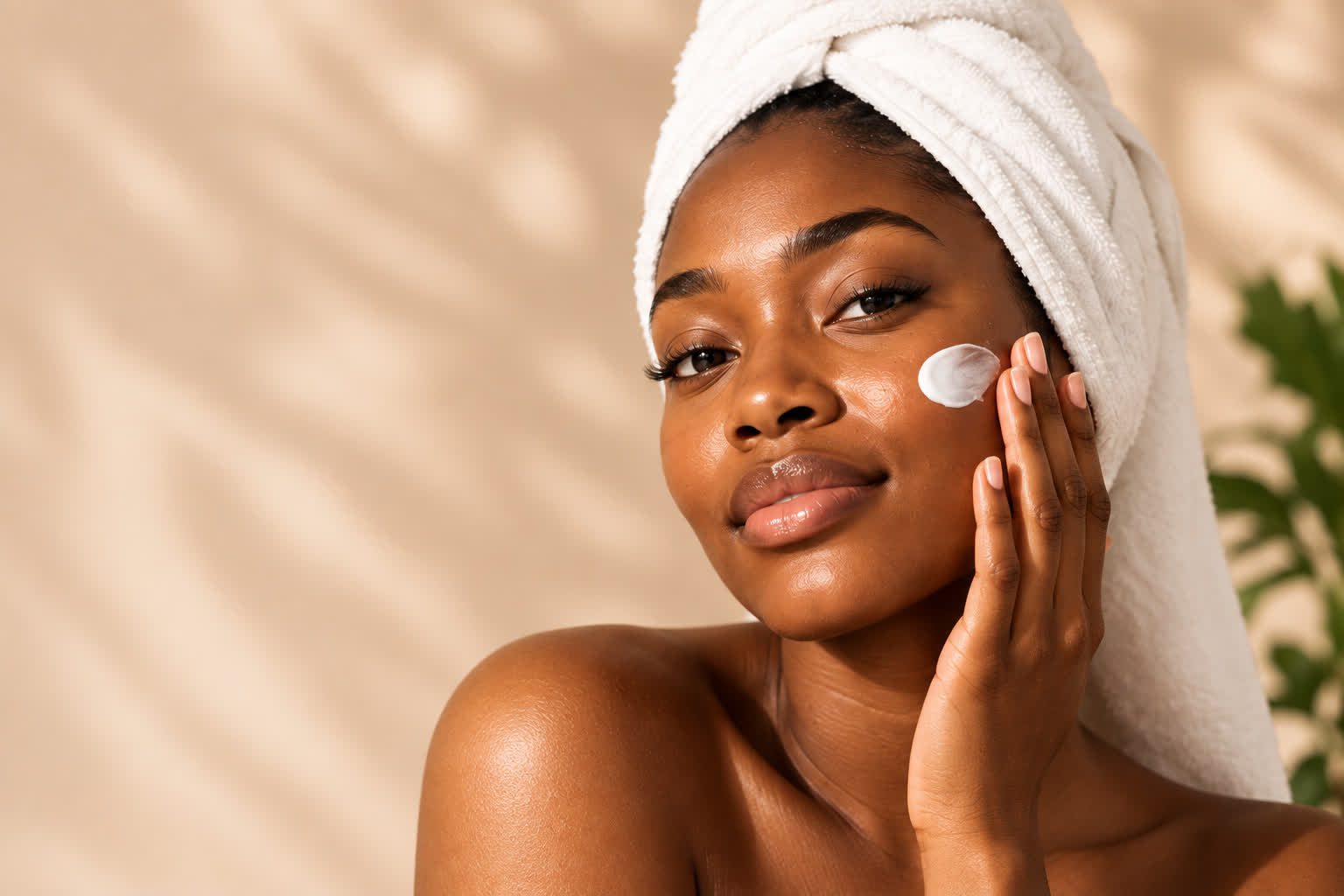
Skincare for Melanin-Rich Skin in Kenya: What Actually Matters?
If you have melanin-rich skin, you may have experienced the same frustrating cycle:
A pimple disappears, but the dark mark remains.
You try a new product, your skin becomes irritated, and another mark appears.
Then you add more products to fix the problem—only to make your routine even more complicated.
The answer isn’t necessarily a stronger product or a 10-step routine.
For melanin-rich skin, effective skincare starts with understanding inflammation, pigmentation, sun exposure and your skin barrier.
And in Kenya, your routine also needs to make sense for your environment, lifestyle and skin type.
At Melanin Theory, we use a simple framework:
Protect → Calm → Correct → Maintain
Understanding Melanin-Rich Skin
Melanin gives skin much of its natural colour and provides some protection against ultraviolet radiation. But having more melanin does not make your skin immune to sun damage.
Melanin-rich skin can still develop:
- Hyperpigmentation
- Post-inflammatory hyperpigmentation (PIH)
- Melasma
- Uneven skin tone
- Premature skin ageing
- Skin cancer
PIH is particularly important because inflammation can trigger increased pigmentation. Acne, eczema, injuries, burns, picking and irritating skincare products can all contribute to dark marks. Research shows that PIH can be especially persistent in skin of colour. [1][2]
That’s why treating the cause of a dark spot is just as important as treating the spot itself.
The Melanin Theory Approach
1. Protect
Protect your skin from unnecessary irritation and UV exposure.
This means:
- Use sunscreen consistently.
- Avoid picking pimples.
- Don’t aggressively scrub your skin.
- Be cautious with products that repeatedly cause burning or irritation.
2. Calm
Control inflammation before aggressively targeting pigmentation.
If acne or another inflammatory skin condition is continually creating new marks, treating only the pigmentation won’t solve the underlying problem.
3. Correct
Once your skin is relatively stable, targeted ingredients can help address specific concerns.
4. Maintain
Consistency matters more than constantly changing products.
A simple routine that you can follow for months is usually more useful than an aggressive routine that irritates your skin after a few weeks.
Step 1: Cleanse Gently
Your cleanser should remove sweat, excess oil, sunscreen and dirt without unnecessarily stripping your skin.
If your skin feels extremely tight or uncomfortable after cleansing, your routine may be too aggressive.
Look for a cleanser that suits your skin type and focus on:
- Gentle cleansing
- Comfortable skin after washing
- Avoiding excessive scrubbing
- Avoiding very hot water
What About Hard Water in Kenya?
Hard water contains minerals such as calcium and magnesium. Research suggests that hard water can contribute to skin irritation under certain cleansing conditions. [8]
But this does not mean that hard water automatically causes acne or pigmentation.
If you suspect your water is affecting your skin, start with the basics: use a gentle cleanser, avoid excessive washing and moisturize afterwards.
Step 2: Treat Your Actual Skin Concern
Not every dark spot requires the same treatment.
Common skincare ingredients used for pigmentation and uneven tone include:
Azelaic Acid
Azelaic acid has been studied for facial hyperpigmentation in darker-skinned patients and can be useful when pigmentation and acne are both concerns. [5]
Niacinamide
Niacinamide has clinical evidence supporting its role in reducing pigmentation through effects on melanosome transfer. [6]
Vitamin C
Vitamin C is widely used for antioxidant protection and uneven skin tone. However, formulation and stability matter, so a higher percentage doesn’t automatically mean better results.
Alpha-Arbutin
Alpha-arbutin is commonly used in products targeting pigmentation and has been investigated for its effects on melanin production. However, evidence varies and it shouldn’t be treated as a guaranteed solution for dark spots. [7]
Don’t Use Everything at Once
This is one of the easiest ways to irritate your skin.
Combining several acids, retinoids, brightening ingredients and exfoliants may leave your skin inflamed—which can potentially contribute to more pigmentation.
Introduce new active ingredients gradually and give your skin time to respond.
Step 3: Support Your Skin Barrier
Your skin barrier helps regulate water loss and protects your skin from environmental stressors.
A moisturizer can support this function and improve skin comfort.
Depending on the formulation, useful moisturizing ingredients may include:
- Ceramides
- Glycerin
- Hyaluronic acid
- Squalane
- Shea butter
- Other humectants and emollients
You don’t need every ingredient.
Choose a moisturizer that works with your skin type and leaves your skin comfortable without causing problems such as excessive oiliness or breakouts.
Step 4: Sunscreen Is Essential
One of the biggest skincare myths is:
“I have dark skin, so I don’t need sunscreen.”
Melanin provides some natural UV protection, but it isn’t complete protection.
UV exposure can contribute to pigmentation and other forms of skin damage. Visible light can also worsen certain pigmentation conditions, particularly melasma. [4][9]
For everyday use, look for:
- Broad-spectrum protection
- SPF 30 or higher
- A formula you will actually use consistently
For people concerned about hyperpigmentation, tinted sunscreens containing iron oxides may offer an additional advantage against visible light. [4][9]
And remember: sunscreen works best as part of a broader sun-protection strategy, including shade, clothing and avoiding unnecessary prolonged exposure.
A Simple Routine for Melanin-Rich Skin
You don’t need a complicated routine.
Morning
1. Cleanse
Use a gentle cleanser if needed.
2. Treat
Use one targeted ingredient if appropriate for your concern.
3. Moisturize
Apply moisturizer if your skin needs it.
4. Sunscreen
Finish with broad-spectrum SPF 30 or higher.
Evening
1. Cleanse
2. Target your concern
3. Moisturize
That’s enough for many people.
Your routine should become more sophisticated only when your skin actually needs it.
How to Approach Dark Spots
If dark spots are your main concern, think beyond the spot itself.
1. Find the trigger
Ask yourself:
- Am I getting acne?
- Am I picking my skin?
- Is a product irritating me?
- Do the marks appear after hair removal?
- Did they appear after an injury or inflammation?
2. Stop the trigger
If new inflammation continues, new pigmentation may continue.
3. Protect your skin
Consistent sun protection can help prevent pigmentation from becoming more noticeable and support treatment. [4][9]
4. Introduce a targeted ingredient
Choose an ingredient based on your concern and skin tolerance.
5. Be patient
Dark spots don’t usually disappear overnight.
The AAD notes that some dark spots may take 6–12 months to fade after the underlying cause has been addressed, while deeper pigmentation can take longer. [9]
What Not to Do
Don’t aggressively scrub dark spots
Irritation can make pigmentation worse.
Don’t constantly change products
You won’t know what’s helping—or irritating you.
Don’t combine every active ingredient
More products don’t automatically mean better results.
Don’t treat your natural skin colour as a problem
Melanin is not something that needs to be removed.
The goal is healthy, even and well-protected skin, not changing your natural complexion.
Be cautious with unregulated lightening products
Products promising extremely rapid changes in skin colour can carry risks, particularly when their ingredients are unknown or improperly labelled.
Skincare in Kenya: Your Environment Matters
There is no single “Kenyan skin type.”
Your skincare needs can be influenced by:
- Sun exposure
- Temperature and humidity
- Time spent outdoors
- Exercise and sweating
- Water quality
- Your occupation
- Your skin type
- Existing skin conditions
Someone working outdoors in coastal Kenya may have very different skincare needs from someone spending most of their day indoors in Nairobi.
So instead of copying someone else’s routine, build one around your skin and your environment.
When Should You See a Dermatologist?
Skincare education has limits.
Seek professional advice if you experience:
- Severe or persistent acne
- A persistent rash
- Significant pain or inflammation
- Rapidly worsening pigmentation
- An unexplained skin change
- A dark spot that changes, bleeds or doesn’t heal
Not every dark mark is simply hyperpigmentation, and darker skin can also develop skin cancer. [11]
Build a Routine That Makes Sense for You
Good skincare for melanin-rich skin isn’t about finding the strongest brightening product.
It’s about understanding your skin and being consistent.
Protect → Calm → Correct → Maintain
Protect your skin from unnecessary UV exposure and irritation.
Calm inflammation and address problems such as acne.
Correct specific concerns with appropriate ingredients.
Maintain a routine that you can realistically follow.
Your natural melanin is part of your skin—not a problem to solve.
Want to Understand Your Skin Better?
Not sure where to begin?
Take the Melanin Theory Skin Analyzer to explore your skin type and primary concerns and receive an educational routine based on your responses.
The Bottom Line
Skincare for melanin-rich skin in Kenya doesn’t need to be complicated.
Start with the fundamentals:
Cleanse gently. Protect your skin. Support your barrier. Treat the underlying concern. Introduce active ingredients carefully. Stay consistent.
The goal isn’t lighter skin.
The goal is healthy skin that works with your melanin—not against it.
References
1. Mar K, Khalid B, Maazi M, et al. Treatment of Post-Inflammatory Hyperpigmentation in Skin of Colour: A Systematic Review. Journal of Cutaneous Medicine and Surgery. 2024;28(5):473–480. DOI: 10.1177/12034754241265716.
2. Mar K, Maazi M, Khalid B, et al. Prevention of Post-Inflammatory Hyperpigmentation in Skin of Colour: A Systematic Review. Australasian Journal of Dermatology. 2025;66(3):119–126. DOI: 10.1111/ajd.14432.
3. Davis EC, Callender VD. Postinflammatory hyperpigmentation: a review of the epidemiology, clinical features, and treatment options in skin of color. Journal of Clinical and Aesthetic Dermatology. 2010;3(7):20–31.
5. Lowe NJ, Rizk D, Grimes P, Billips M, Pincus S. Azelaic acid 20% cream in the treatment of facial hyperpigmentation in darker-skinned patients. Clinical Therapeutics. 1998;20(5):945–959.
4. Fatima S, Braunberger T, Mohammad TF, Kohli I, Hamzavi IH. The Role of Sunscreen in Melasma and Postinflammatory Hyperpigmentation. Indian Journal of Dermatology. 2020;65(1):5–10. DOI: 10.4103/ijd.IJD_295_18.
6. Hakozaki T, Minwalla L, Zhuang L, et al. The effect of niacinamide on reducing cutaneous pigmentation and suppression of melanosome transfer. British Journal of Dermatology. 2002;147(1):20–31.
7. Saeedi M, Khezri K, Seyed Zakaryaei A, Mohammadamini H. A comprehensive review of the therapeutic potential of α-arbutin. Phytotherapy Research. 2021;35(8):4136–4154.
8. Warren R, Ertel KD, Bartolo RG, Levine MJ, Bryant PB, Wong LF. The influence of hard water (calcium) and surfactants on irritant contact dermatitis. Contact Dermatitis. 1996;35(6):337–343.
9. American Academy of Dermatology. How to fade dark spots in darker skin tones.
10. American Academy of Dermatology. How to decode a sunscreen label.
11. American Academy of Dermatology. Finding skin cancer in darker skin tones.
Leave a Reply