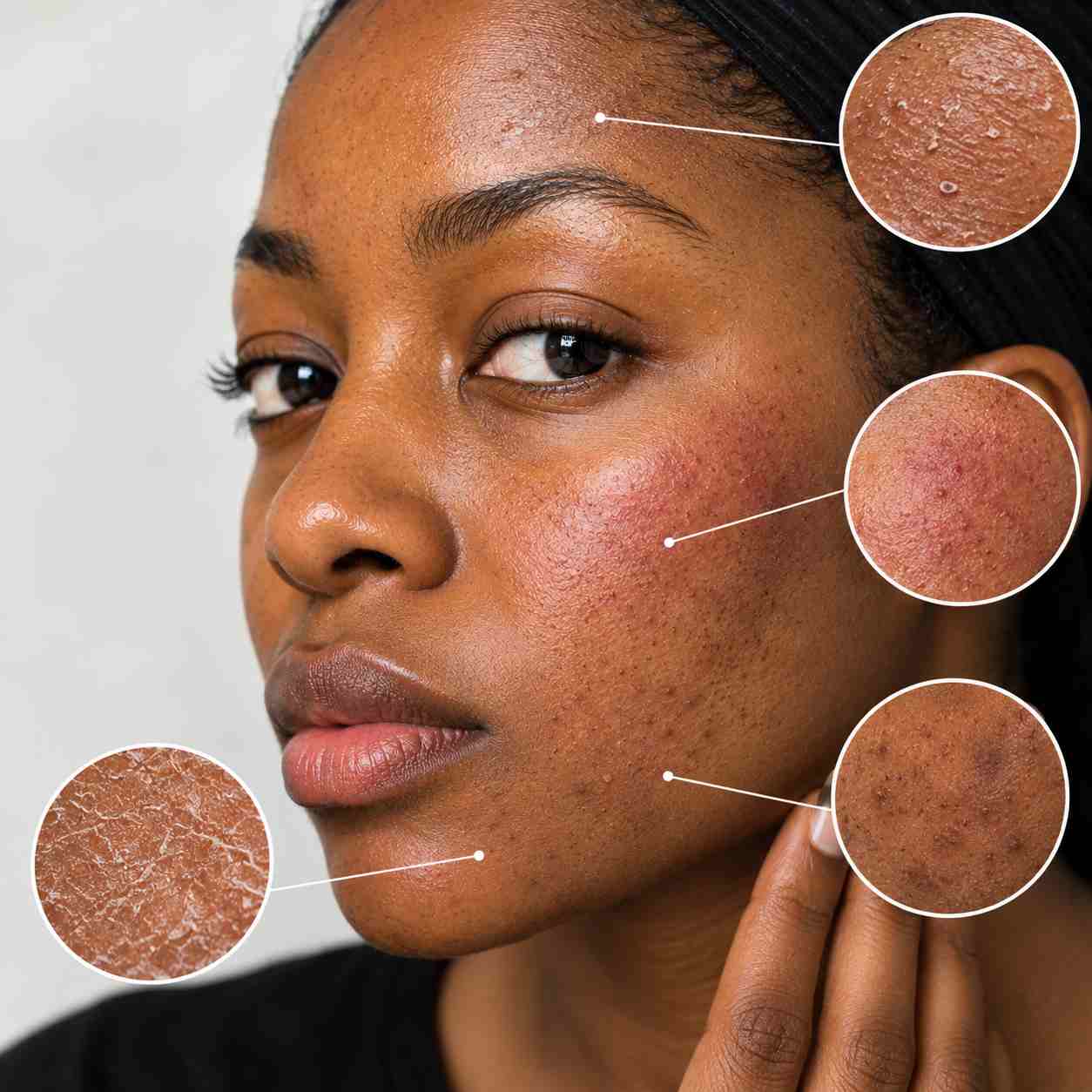
Does your face sting when you apply moisturizer? Does your skin feel tight after washing, even though it becomes oily a few hours later? Are you experiencing unexpected flaking, dryness, or sensitivity to products you used comfortably before?
Your skin may be irritated, and a weakened skin barrier could be one possible explanation.
The solution isn’t necessarily another serum, an expensive moisturizer, or a complete skincare overhaul. Often, the best starting point is to remove potential irritants, moisturize consistently, and protect your skin while it recovers.
This guide explains how to care for an irritated skin barrier, which ingredients to look for, how to choose affordable skincare products in Kenya, and when to seek professional help.
What Is the Skin Barrier?
Your skin barrier is the outermost protective layer of your skin. It helps retain moisture and protects against external irritants.
Think of it as a protective wall. Skin cells form the structure, while natural lipids—including ceramides, cholesterol, and fatty acids—help hold everything together.
When this protective layer is disrupted, your skin can lose moisture more easily and become less comfortable.
Five possible signs of a weakened or irritated skin barrier
– Stinging or burning: Products that previously felt comfortable now cause discomfort.
– Tightness after washing: Your face feels stretched or uncomfortable, even when it looks oily.
– Dryness and flaking: Your skin becomes rough, flaky, or unusually dry.
– Increased sensitivity: Products, fragrances, sweat, or environmental conditions trigger irritation.
– Redness or tenderness: Your skin looks inflamed or feels uncomfortable to touch.
These symptoms can suggest irritation, but they do not prove that your skin barrier is damaged. Eczema, contact dermatitis, rosacea, and other conditions can cause similar symptoms.
What Can Damage Your Skin Barrier in Kenya?
Understanding what may be triggering your symptoms helps you choose a more appropriate solution.
1. Overusing active ingredients
Glycolic acid, salicylic acid, retinoids, and other treatments can help address specific skin concerns. However, using them too frequently, combining several strong products, or choosing formulations that are too harsh for your skin can cause irritation.
If stinging, peeling, or unusual tightness began after introducing a new treatment, consider whether that product or your overall routine is contributing.
2. Harsh cleansing habits
Strong soaps, excessive washing, vigorous scrubbing, and hot water can aggravate dryness and irritation.
Your face does not need to feel squeaky-clean for it to be properly cleansed.
3. Sun exposure, heat, and sweating
Kenya’s climate varies across regions, but sun exposure, hot conditions, wind, and sweating can aggravate already sensitive skin.
Sun protection remains important, particularly if you are prone to dark marks after inflammation.
4. Hard water and other environmental irritants
Some Kenyan households use borehole water with high mineral content. Hard water may aggravate dryness or existing skin problems in some people, although the effects vary.
If your skin repeatedly feels uncomfortable after washing, consider your cleanser, washing habits, water quality, and other possible irritants. Do not assume that all borehole water is hard or that water is necessarily the cause.
5. Using too many products at once
Adding several new serums, toners, exfoliants, and moisturizers makes it harder to identify the cause of irritation.
Simplifying your routine reduces the number of potential triggers and makes it easier to monitor your skin.
How to Repair Your Skin Barrier: Start With These Three Steps
You do not need a ten-step routine. Begin with gentle cleansing, moisturizing, and sun protection.
Step 1: Cleanse gently
Choose a cleanser that removes dirt and sunscreen without leaving your skin feeling tight or uncomfortable.
What to do:
– Use lukewarm water rather than hot water.
– Gently massage cleanser onto your face with your fingertips.
– Avoid facial brushes, rough washcloths, and scrubbing.
– Cleanse in the evening to remove sunscreen, dirt, and excess oil.
– In the morning, rinse with water if cleansing makes your skin feel dry or tight.
Products to consider: Simple Kind to Skin Refreshing Facial Wash and CeraVe Hydrating Facial Cleanser are examples to investigate, provided the current formulations suit your skin.
You do not need to buy a new cleanser if your existing one is gentle and comfortable.
Step 2: Moisturize consistently
Moisturizer helps reduce moisture loss and supports a more comfortable skin surface.
After cleansing, gently pat your face without rubbing it completely dry, then apply moisturizer while your skin is still slightly damp.
Look for a formulation containing ingredients such as:
– Glycerin: Attracts water to help hydrate the skin.
– Ceramides: Help replenish lipids that support the skin barrier.
– Petrolatum: Forms a protective layer that reduces moisture loss.
– Dimethicone: Helps soften the skin and reduce water loss.
– Hyaluronic acid: Helps attract water to the skin.
You do not need every ingredient in one product. The formulation, texture, and your skin’s tolerance matter more than the number of ingredients listed.
Products to consider:
– Simple Hydrating Light Moisturiser for people who prefer a lighter texture.
– CeraVe Moisturising Cream for those who need a richer moisturizer.
– La Roche-Posay Cicaplast Baume B5+ as another option to investigate for dry, irritated skin.
These are examples, not guaranteed treatments. Check the current formulation and choose something your skin tolerates.
What if your skin is oily?
Oily skin can still become dehydrated or irritated. If your face feels tight but becomes shiny later, try a lightweight moisturizer rather than skipping moisturizer entirely.
If you have combination skin, you can apply a little more moisturizer to dry areas and less to areas that become oily.
Want to understand what makes a moisturizer effective? Explore the Melanin Theory Ingredient Library to learn about ceramides, glycerin, and other moisturizing ingredients.
Step 3: Protect your skin during the day
Sun protection is important for all skin tones. UV exposure can contribute to skin damage and worsen the appearance of post-inflammatory hyperpigmentation—dark marks that can remain after acne or other inflammation.
Choose a broad-spectrum sunscreen with SPF 30 or higher that you can tolerate comfortably. A water-resistant formula may be useful when sweating or spending extended periods outdoors.
If your sunscreen repeatedly causes burning or stinging, stop using that particular product and look for a better-tolerated option. Sunscreen formulations differ, and chemical sunscreens do not universally irritate sensitive skin.
Product to investigate: La Roche-Posay Anthelios Invisible Fluid SPF 50+ is one option to compare. Verify the current Kenyan price, availability, formulation, and your own tolerance before purchasing.
No sunscreen is guaranteed to leave zero white cast or feel comfortable on every person’s skin. While finding a suitable formula, supplement sun protection with shade, a wide-brimmed hat, and protective clothing.
If a product causes severe burning, swelling, or a significant reaction, rinse it off gently and seek medical advice when necessary.
What Should You Stop Using While Your Skin Is Irritated?
If your routine may be contributing to irritation, temporarily remove non-essential treatments that could make the problem worse.
Consider pausing:
– Facial scrubs and cleansing brushes.
– Glycolic acid and other exfoliating acids.
– Retinol and other non-prescribed retinoid products.
– Strongly fragranced products or products that consistently sting.
– Multiple new serums or treatments.
– Harsh soaps and very hot water.
Do not automatically discontinue prescribed acne treatments or other medication. Ask your prescribing healthcare professional whether any changes are appropriate.
You also do not need to throw away every product you own. Keep using products you tolerate comfortably and focus on removing likely irritants.
Important: Do not attempt to treat persistent burning by repeatedly switching products. If even a gentle cleanser or moisturizer causes significant discomfort, consider seeking professional advice.
A Simple Skin Barrier Recovery Plan
Here is how to put the advice into practice without overcomplicating your routine.
Morning
1. Rinse with water or use a gentle cleanser if needed.
2. Apply a moisturizer that feels comfortable.
3. Apply a tolerable broad-spectrum sunscreen with SPF 30 or higher.
Evening
1. Gently cleanse to remove sunscreen, dirt, and excess oil.
2. Apply your moisturizer.
3. Avoid adding new active treatments while your skin remains irritated.
For the next several days
Keep the routine consistent and observe whether stinging, tightness, and flaking improve. Avoid repeatedly testing new products or exfoliating to remove flakes.
There is no single recovery timeline. Mild irritation may settle within days after the trigger is removed, while more persistent problems can take weeks or longer.
Once your skin has settled, reintroduce non-essential treatments gradually, one at a time. If symptoms persist, worsen, or repeatedly return, seek professional advice rather than continuing to experiment.
When Should You See a Dermatologist?
Not every irritated face has a damaged skin barrier. Eczema, contact dermatitis, rosacea, allergies, and other conditions may require specific treatment.
Seek medical advice if you experience:
– Persistent or worsening irritation.
– A spreading rash or significant swelling.
– Painful cracks or skin that becomes increasingly tender.
– Symptoms that do not improve after simplifying your routine.
– Repeated reactions to products you previously tolerated.
Severe facial swelling accompanied by difficulty breathing requires emergency medical attention.
A qualified healthcare professional can help identify the cause and recommend appropriate treatment. Do not rely on cosmetic products alone when an underlying medical condition is possible.
How to Prevent Your Skin Barrier From Becoming Irritated Again
Once your skin feels comfortable, avoid immediately returning to an aggressive routine.
– Introduce new products one at a time.
– Follow product instructions rather than assuming more frequent use produces faster results.
– Cleanse gently and moisturize consistently.
– Use appropriate sun protection.
– Choose ingredients according to your skin concerns and tolerance, not social media trends.
– Avoid treating every new skin concern with another active ingredient.
If you are also concerned about dark spots, be cautious about restarting strong brightening treatments while your skin is still irritated. Inflammation can contribute to post-inflammatory hyperpigmentation, which is particularly relevant for melanin-rich skin.
For a broader foundation, read our “Ultimate Guide to Skincare for Melanin-Rich Skin in Kenya”
You can also explore our Ingredient Library to learn about ingredients such as niacinamide and azelaic acid, including their uses and limitations.
Build a Skincare Routine That Fits Your Skin
Your skin does not necessarily need more products when it becomes irritated. It needs a routine that addresses its current needs.
If you are unsure where to begin, take the Melanin Theory Skin Assessment to explore your skin type and concerns and discover educational routine suggestions.
The assessment can help you make more informed skincare choices, but it cannot diagnose a damaged skin barrier or determine whether you have a medical skin condition.
Remember: Start simple, monitor how your skin responds, and seek professional help when symptoms suggest that skincare alone may not be enough.
Sources and Further Reading
– American Academy of Dermatology: Dermatologists’ tips for relieving dry skin
– American Academy of Dermatology: Skincare on a budget
– American Academy of Dermatology: How to choose a moisturizer
Leave a Reply