For most people, a healthy morning routine relies on three straightforward steps:
Buying more skincare won’t necessarily give you better skin. If your products leave you irritated, your dark spots persist, or your budget keeps shrinking, it is time to simplify.
Cleanse → Treat → Protect.
Before diving in, consider what your skin actually needs. If you are still figuring out how melanin-rich skin behaves—why it scars differently, why pigmentation lingers, and why barrier health matters—start with our Melanin Explained: Understanding the Science Behind Dark Skin guide. It will completely change how you read ingredient labels.
Why Simple Beats Complicated
The skincare industry profits from confusion. Every week brings a new “must-have” serum, a trending ingredient, or a ten-step routine promising glass skin. However, using too many products does not equal better results. Instead, it frequently leads to more irritation, higher expenses, and endless guesswork about what is actually working.
A smart morning routine comes down to three essentials. Everything else is optional. Once you master these three baseline steps, you can add extra products with clear intention rather than on an impulse.
1. Cleanse Gently
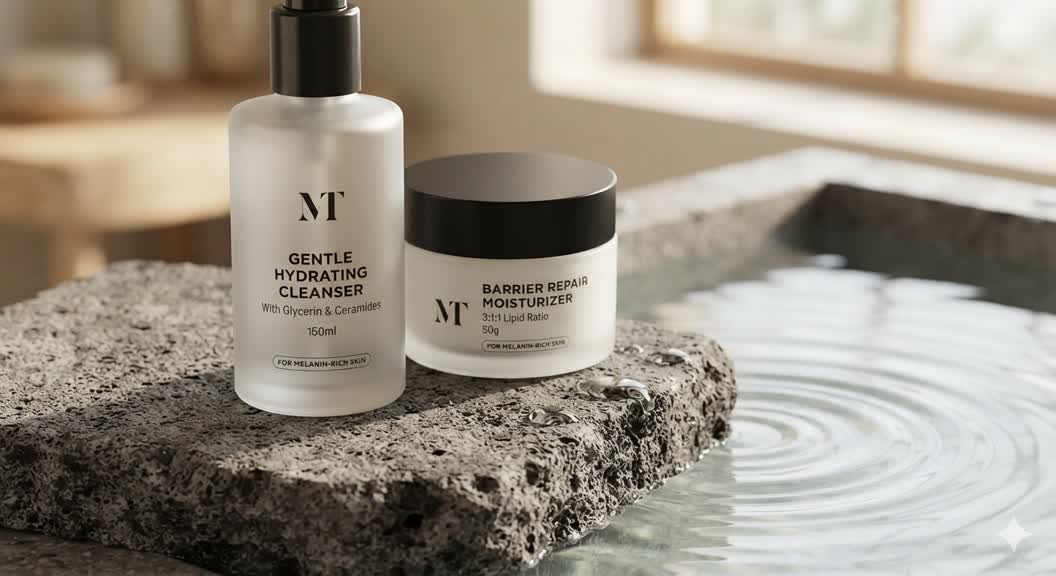
Choose a cleanser that removes excess oil and sweat without leaving your skin tight, dry, or uncomfortable.
- Oily or Combination Skin: A foaming gel cleanser effectively targets excess sebum while preserving natural hydration.
- Dry or Sensitive Skin: A hydrating cream-to-foam cleanser removes impurities without stripping the skin’s moisture barrier.
Scrubbing harder will not make your skin healthier. If your face feels squeaky-clean or stripped after washing, your cleanser is likely too aggressive. That tight sensation is a warning sign that your skin barrier is compromised.
If you notice your skin feeling tight after showering—or your products suddenly seem to stop working after moving houses—the issue might not be your cleanser at all. Our breakdown of Nairobi Hard Water and Your Skin Barrier explains how local mineral content triggers inflammation and breakouts, leading to post-inflammatory hyperpigmentation (PIH).
Recommended Authentics at Vitapharm Beauty:
- For normal to oily skin: CeraVe Foaming Facial Cleanser balances oil with ceramides and niacinamide.
- For dry to sensitive skin: CeraVe Hydrating Cream-to-Foam Cleanser uses amino acids to maintain all-day moisture.
- For deep exfoliation and brightening: QRxLabs Glycolic Acid Gel Cleanser breaks down dead skin cells using a gentle 5% glycolic acid blend.
Note: In the morning, a gentle rinse or mild wash is usually enough to remove overnight oils. Your deep evening cleanse matters much more, especially when removing daily sunscreen.
2. Treat One Concern
Do not buy five different serums just because they are trending on social media. Choose exactly one targeted active treatment based on your primary skin goals.
- Dark Spots & Hyperpigmentation: Look for proven melanin-safe brighteners like azelaic acid, niacinamide, or vitamin C.
- Dehydrated Skin: Focus on deeply hydrating humectants such as glycerin or hyaluronic acid.
- Irritated Skin: Strip back your routine completely and rest your skin before adding any active ingredients.
Introduce only one new treatment at a time. Irritation can severely worsen dark marks on melanin-rich skin, a condition medically known as post-inflammatory hyperpigmentation. This is often caused by doing too much too soon, rather than by a single product. If your skin is actively reactive, stripping back to just a gentle cleanser and sunscreen for two weeks is often the most effective remedy.
If dark spots are your main frustration and they refuse to fade despite consistent effort, the problem might not be your serum. Our post on Why Your Dark Spots Aren’t Fading covers the hidden saboteurs most people miss. Once you select your targeted treatment, give it time. Most active ingredients require 6 to 12 weeks of consistent use before you see visible changes. Switching products every few weeks guarantees you will never know what actually works.
3. Protect With Sunscreen
Dark skin absolutely requires daily sun protection. UV rays and visible light deeply accelerate signs of aging and aggressively darken existing hyperpigmentation. If you are actively treating dark spots, sunscreen is not an optional extra—it is the exact tool that makes your treatment work. Without daily SPF, you are fading pigmentation with your serum on one hand and deepening it with the sun on the other.
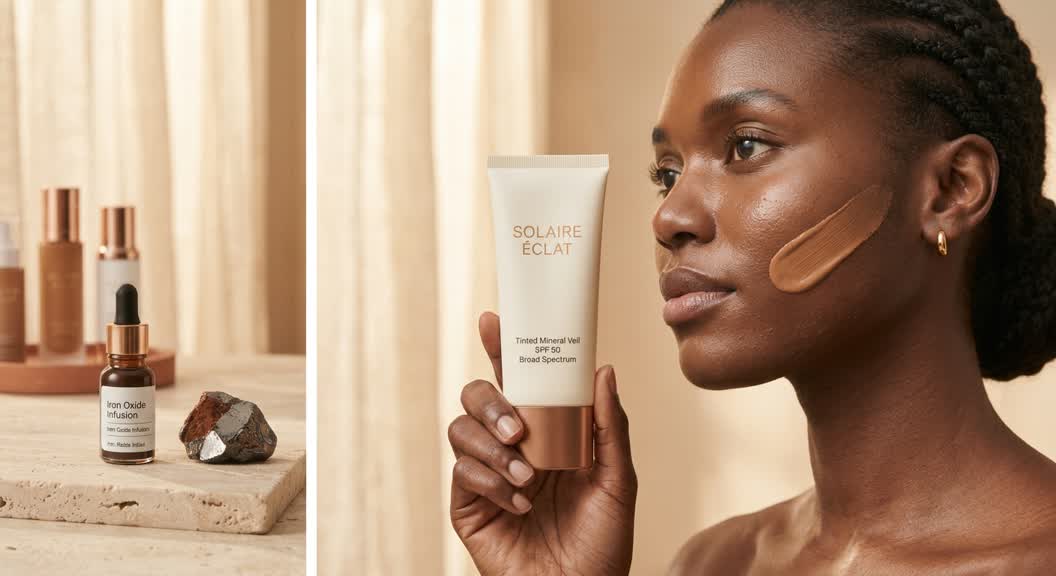
According to clinical guidance from the American Academy of Dermatology (AAD), the gold standard for skin of color is a tinted sunscreen containing iron oxide. While standard sunscreens shield against ultraviolet (UV) rays, iron oxide provides a necessary physical shield against visible light, which is a major driver of stubborn hyperpigmentation in darker skin tones.
When building your skincare routine for dark skin in Kenya, ensure your sunscreen checks these boxes:
- SPF 30 or higher with broad-spectrum protection.
- Contains iron oxide (typically listed under inactive ingredients).
- A non-comedogenic formula that won’t clog pores if you are oily-prone.
- Blends seamlessly into your skin tone without leaving a white cast.
Apply your sunscreen generously to all exposed skin every morning, and make sure to reapply every two hours when spending extended time outdoors, swimming, or sweating.
How Much Should You Spend?
Building a budget-friendly skincare routine in Kenya means spending smart. If you are working with a tight budget, invest more money into your targeted treatment serum and your sunscreen, and spend much less on your cleanser. A basic, gentle cleanser stays on your face for under a minute before washing down the drain—there is no reason to pay premium luxury prices for it.
Always verify product authenticity and local retail prices before buying. Counterfeit skincare is a widespread issue in the Kenyan open market, meaning prices that seem too good to be true usually are. To guarantee you are applying authentic, unadulterated formulas, always purchase from authorized and trusted retailers like Vitapharm Beauty.
If you are unsure which specific active ingredients suit your lifestyle, explore our comprehensive Melanin Theory Ingredient Library before spending money on another bottle.
Frequently Asked Questions
Do I really need sunscreen if I have dark skin?
Yes. Melanin provides a natural baseline shield, but UV rays and visible light still trigger cellular inflammation and worsen dark patches. Daily sunscreen application is essential for maintaining an even skin tone.
Which cleanser is best for an affordable routine in Kenya?
It depends entirely on your skin type. Gel cleansers are ideal for balancing oily skin, while cream-to-foam formulas work best to protect dry or sensitive skin from dehydration.
How long does it take to see results from a new serum?
Most active treatments require 6 to 12 weeks of daily consistency to show visible improvement. Patience and routine discipline matter far more than an expensive price tag.
What is the cheapest way to build a skincare routine in Kenya?
Stick strictly to the three foundational essentials: a gentle cleanser, one active treatment, and a reliable daily sunscreen. Cutting out unnecessary extra steps saves money and keeps your skin barrier safe.
The Takeaway
Cleanse → Treat → Protect.
Keep your morning routine simple, introduce new active ingredients gradually, and give them the necessary time to work. Your natural melanin is beautiful—not a problem that needs fixing.
Disclaimer: This article is strictly for educational purposes and does not constitute medical advice. Persistent acne, severe irritation, or deep cystic pigmentation may require a professional assessment from a board-certified dermatologist.
References:
American Academy of Dermatology (AAD) — How to fade dark spots in darker skin tones.
Leave a Reply